WHAT SHOULD I BE DOING INSTEAD OF THIS?
 
Home - Blogs - Staff Blogs - Popular Blogs
Politics/Issues
 
by 10.26.2010
Posted In: 2010 Election, Congress, Republicans, Democrats at 03:18 PM | Permalink | Comments (0)


Boehner in D.C. on Election Night

Some critics have alleged Congressman John Boehner (R-West Chester) doesn't pay enough attention to the needs of his district, a charge he flatly denies. But come Election Night, Boehner won't be celebrating (or drowning his sorrows) in Southwest Ohio.

Read More


by Kevin Osborne 09.08.2011
 
 
6a00d83451586c69e200e552170eb28833-800wi

Ron Paul Jumps the Shark

Some progressive Democrats share a modest admiration for Ron Paul, a U.S. congressman from Texas and perennial darkhorse contender for the Republican presidential nomination.

Read More


by 07.15.2011
Posted In: Republicans, Ethics, Family, Media Criticism at 01:16 PM | Permalink | Comments (0)


The GOP, 'Family Values' and Hypocrisy

What did they know and when did they know it? Moreover, why aren't they commenting on it?

“They,” in this case, are leaders of the Ohio Republican Party. And “it” is the drunken driving arrest of State Rep. Robert Mecklenborg (R-Green Township). In the 16 days since the April arrest became publicized through the media, the state GOP has been curiously silent about the matter.

Read More


by Kevin Osborne 02.20.2012
 
 
mitt-romney.widea

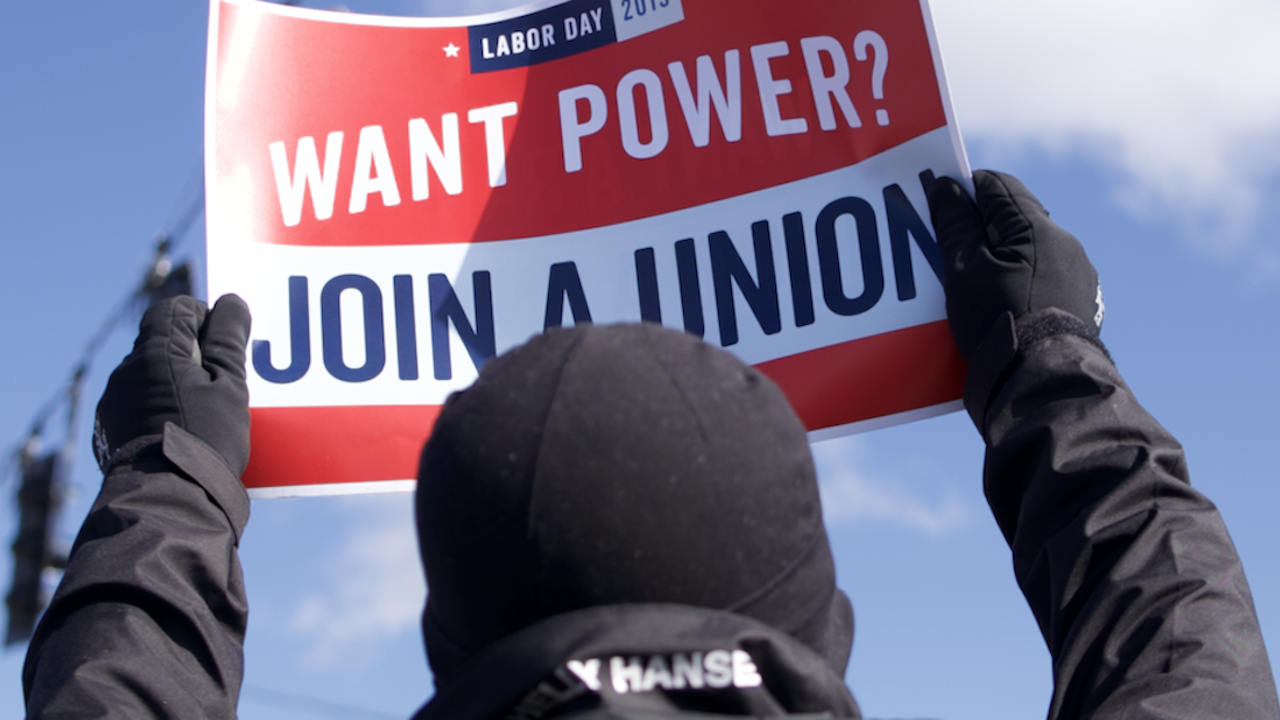
Dems, Unions Protest Romney Visit

As Mitt Romney gets ready to attend a $2,500 a plate fundraiser at downtown’s Great American Tower, the local Democratic Party chairman says the presidential hopeful’s economic plan “would do nothing to create jobs now.”

Hamilton County Democratic Party Chairman Tim Burke released a statement this afternoon describing why he believes a Romney presidency would be disastrous for middle-class Americans.


Meanwhile, a group of community leaders led a protest outside of the East Fourth Street office building as attendees arrived for the fundraiser. The protest was organized by the Service Employees International Union (SEIU) District 1199, which represents more than 30,000 health-care and social service workers across Ohio, Kentucky and West Virginia.

“Mitt Romney holding $2,500 per person fundraiser at the Great American Tower is a perfect example of exactly who he is and who he represents,” said Becky Williams, SEIU’s district president, in a prepared statement. “While Romney is hobnobbing on the rooftop with his wealthy donors hosted by American Financial Group, ordinary Ohioans are struggling to find work and provide for their families.”

The co-host for the fundraiser is S. Craig Lindner, co-president and director of American Financial Group Inc., whose total compensation in 2010 totaled $8.3 million, according to Forbes magazine.

“Nothing Mitt Romney says can change the fact that he spent his career as a corporate buyout specialist who put profits over people and lined his pockets by outsourcing jobs, closing down plants and laying off workers,” Burke said.

“His 59-point economic plan would do nothing to create jobs now, fix America’s economy or help struggling homeowners avoid foreclosure. His tax plan would benefit the ultra-wealthy and do nothing to help middle-class families in Greater Cincinnati,” Burke added.

In preparation for Romney’s visit today, the Democratic National Committee pointed out that the investment firm once led by the candidate, Bain Capital, rejected a government offer to invest in General Motors (GM) during the 2008 financial crisis.

Romney has said on the campaign trail that he opposed the government bailout of U.S. automakers because the private market would have provided loans so GM and Chrysler Corp. could go through managed bankruptcy. But sources told The New York Times that Bain turned down an offer to help GM at the time.

“To go through the bankruptcy process, both companies needed billions of dollars in financing, money that auto executives and government officials who were involved with Mr. Obama’s auto task force say was not available at a time when the credit markets had dried up,” the article stated.

It added, “The only entity that could provide the $80 billion needed, they say, was the federal government. No private companies would come to the industry’s aid, and the only path through bankruptcy would have been Chapter 7 liquidation, not the more orderly Chapter 11 reorganization, these people said.”


by 04.15.2011
 
 
-

Mills: Ex-Chief a "Republican Leader"

Catherine Smith Mills, a new Republican candidate for Cincinnati City Council, is raising eyebrows with her campaigning.

Mills held a fundraiser April 8 that featured former Police Chief Thomas Streicher Jr. as the keynote speaker. In a press release touting the event, Mills is quoted as saying, “As a first time candidate, I am so lucky to have the support and mentorship of Republican leaders in Cincinnati like Tom Streicher.”

Read More


by German Lopez 11.27.2012
Posted In: Budget, Republicans, Democrats, News, State Legislature at 09:56 AM | Permalink | Comments (1)
 
 
ohio statehouse

Morning News and Stuff

Ohio Republican supermajority hangs on 14 votes, city unveils budget, county passes budget

In the Ohio House of Representatives, the difference between a Republican supermajority and a normal majority is now 14 votes. That’s how many votes are splitting Republican Rep. Al Landis and Democratic challenger Josh O'Farrell. The small difference has already triggered an automatic recount and likely a series of lawsuits from Democrats over counting provisional ballots. The supermajority would allow Ohio House Republicans to pass legislation without worry of a governor’s veto and place any measure on the ballot — including personhood initiatives — without bipartisan approval.

City Manager Milton Dohoney Jr. unveiled his 2013 budget proposal at a press conference yesterday. The proposal will pursue privatizing the city’s parking services to help close a $34 million deficit. The privatization plan has already faced some early criticism from Democrat P.G. Sittenfeld. The budget will also make minor cuts elsewhere. In addition to the 2013 budget, the Tentative Tax Budget proposal, which Dohoney passed to City Council and the mayor yesterday, also raises property tax rates.

Meanwhile, the Hamilton County Board of Commissioners approved the 2013 budget in a 2-1 vote. Democrat Todd Portune was outvoted by Republicans Chris Monzel and Board President Greg Hartmann. The final budget was basically Hartmann’s “austerity” proposal, barring some minor tweaks. The cuts could cost 150 or more Hamilton County jobs.

Councilman Chris Smitherman is facing a challenge for his spot as president of the Cincinnati chapter of the NAACP. The councilman’s opponent is Bob Richardson, a former officer of Laborers Local 265 and former president of the Cincinnati AFL-CIO Labor Council. Richardson’s son told WVXU, “I think we have seen the NAACP veer off its core principles and turn into a tool for Smitherman and his conservative ideas.”

In a promising sign for the local economy, Greater Cincinnati banks are taking in more money from deposits.

The 21c Museum Hotel opened yesterday. But the hotel has critics, including Josh Spring from the Greater Cincinnati Homeless Coalition. Drawing a comparison to the situation between Western & Southern and the Anna Louise Inn, Spring said the hotel ended up displacing far too many people.

Cincinnati Children’s Hospital is taking up research into how autism develops.

A new report found expanding Medicaid in Ohio could cost the state $3.1 billion. The money would be enough to insure 457,000 uninsured Ohioans. Previous studies found states that expanded Medicaid faced less health problems.

One concern with the state's “fracking” boom: water supply. Some are worried that the amount of water needed to fuel hydraulic fracturing, a drilling technique for oil and gas, will drain Ohio’s wells and reservoirs.

After some sentencing reform, Ohio’s inmate population is not decreasing as fast as some state officials would like. As the state deals with prison overpopulation and more expensive prisons, Gov. John Kasich’s administration has turned to privatization. CityBeat looked at issues surrounding private prisons and the connections between the state government and private prison companies here.

Ohio women are having fewer abortions in the state. The drop seems largely attributable to increased access to birth control. Better access to health care and improved health education are also factors.

Ever forget to take some medication? No longer. There is now a pill that can inform others when it's taken.


by Jason Gargano 02.23.2011
Posted In: News, Republicans, Labor Unions at 09:13 PM | Permalink | Comments (1)


Wisconsin Governor Fooled in Prank Phone Call

In this week’s Porkopolis column, Kevin Osborne writes about the coordinated effort by newly elected Tea Party-backed Republican governors like Wisconsin’s Scott Walker and Ohio’s John Kasich to use the looming budget crises as a reason take away labor unions’ ability to collectively bargain, with the ultimate goal of busting unions altogether.

Read More


by 04.02.2010


GOP Leaders Viewed Poorly

The weekly “State of the Nation” poll by Research 2000 found that President Obama is viewed favorably by 56 percent of respondents, compared to 39 percent who hold an unfavorable opinion about him. Five percent had no opinion.

House Minority Leader John Boehner (R-West Chester) had a whopping 64 percent unfavorable rating, with just 17 percent viewing him favorably. Nineteen percent had no opinion.

Senate Minority Leader Mitch McConnell (R-Louisville) also had a 64 percent unfavorable rating, compared to 20 percent who view him favorably. Sixteen percent had no opinion.

The poll was conducted for The Daily Kos Web site.

A total of 1,200 registered voters nationwide were interviewed by telephone from March 22-25.

The margin of error is 2.8 percent, meaning there is a 95 percent probability that the “true” figure would fall within that range if the entire adult population were sampled.

Boehner and McConnell can take some solace: Democratic Congressional leaders fared poorly too.

House Speaker Nancy Pelosi (D-Calif.) had a 54 percent unfavorable rating, while Senate Majority Leader Harry Reid (D-Nevada) had a 66 percent unfavorable rating, according to the poll.

Still, Congressional Democrats fare better overall than their Republican counterparts.

Congressional Democrats had a 56 percent unfavorable rating, compared to 40 percent who view them favorably. Four percent had no opinion.

By comparison, Congressional Republicans had a 71 percent unfavorable rating, with 21 percent viewing them favorably. Eight percent had no opinion.

That’s an increase of 3 percent who view Democrats favorably from a week earlier, compared to a decrease of 7 percent for Republicans.

Also, the Democratic Party had a 40 percent favorable rating, compared to the Republican Party’s 28 percent.

There’s still seven months until the general election so anything could happen but, if those numbers persist, it might be time for GOP leaders to scale back their talk of a Republican landslide in Congressional races.


by German Lopez 09.05.2012
Posted In: 2012 Election, Republicans, News, Government at 01:12 PM | Permalink | Comments (1)
 
 
voters first ad

Voters First Mocks Redistricting Process

Boehner staffer got request filled in 13 minutes, no questions asked

The Ohio Voters First campaign for Issue 2 has shined some light into how Ohio’s district boundaries are redrawn. In a new graph, the campaign revealed that getting a business added to a district is sometimes as simple as asking for a favor.

Just a day before the approval of Ohio’s new district maps, Tom Whatman, a Boehner staffer, sent an email to Adam Kincaid, a staffer for the National Republican Congressional Committee, and others in charge of redistricting. In the back-and-forth, Whatman asks for a “small carve out” to include a manufacturing business in the congressional district for Rep. Jim Renacci, a Republican who has received support from the business in the past. Before 13 minutes had passed, Kincaid replied to Whatman, securing the change with no questions asked.

“Thanks guys,” Whatman replied. “Very important to someone important to us all.”

The Voters First graph, which mocks the 13-minute exchange with the title “Jim Renacci: The 13 Minute Man,” can be found here. The full emails, which were released by the Ohio Campaign for Accountable Redistricting in a Dec. 2011 report, can be seen online here.

Jim Slagle, who served as manager for the Ohio Campaign for Accountable Redistricting, says the emails are indicative of a redistricting process that is controlled entirely by “political insiders.” Slagle says the interests of the people come second to politics under the current system.

If Issue 2 is approved by voters this November, the redistricting process will be placed in the hands of an independent citizens commission. Under the current system, the state government is tasked with redrawing district boundaries every 10 years. Republicans have controlled the process four out of six times since 1967, which is when the process was first enacted into law. The political party in charge typically redraws districts in a politically favorable manner in a process known as “gerrymandering.”

On Saturday, Rep. Steve Chabot, who represents Cincinnati in the U.S. House of Representatives, told supporters to vote against Issue 2. Chabot is enormously benefiting off the current redistricting process. Cincinnati’s district was redrawn to include Warren County, which has more rural voters that typically vote Republican, and less of Cincinnati, which has more urban voters that typically vote Democrat. The shift to less urban voters is emphasized in this graph by MapGrapher:


by German Lopez 09.18.2012
 
 
jon_husted_518045c

Husted Suggests 'More Strict' ID Law

As other states come under fire, Ohio hints at voter ID law

It seems Ohio may soon get a controversial voter ID law. While speaking at a Tea Party event in Cincinnati on Monday, Secretary of State Jon Husted said the General Assembly is likely to take up a voter ID law after the November election.

“I was listening to a show one night where they talked about these onerous rules, these onerous photo ID rules and the onerous rules in Ohio on photo ID,” he said. “Well, the photo ID law in Ohio is not onerous. As a matter of fact, I suspect the General Assembly will take up a more strict version of what we have after what we’ve been through with this election process.”

Later on, an audience member commented on the issue by pointing out Ohioans can currently identify themselves with 12 different types of ID. In response, Husted clarified his position: “We need to streamline that because it’s really hard for a poll worker to know exactly what they’re supposed to be checking. And I’m quite confident the legislature is going to take that issue up.”

Under current Ohio law, voters can go to the polls with state ID cards, driver’s licenses, military IDs, utility bills, paychecks, bank statements and other forms of ID. Republicans have sometimes criticized the many options, particularly for not being state-issued and not requiring a photo.

Other states have taken up voter ID laws. Pennsylvania’s controversial law requires voters to have state-issued photo ID. A Pennsylvania court recently upheld the law, but the Pennsylvania Supreme Court vacated the decision today and asked the lower court to reconsider. The ruling from the Pennsylvania Supreme Court gives lower courts room to strike down the law.

Democrats criticize ID laws for suppressing voters. A study from researchers at the University of Chicago and Washington University in St. Louis found nearly 700,000 young, minority voters will be unable to cast a ballot due to voter ID laws. Both young and minority voters tend to side with Democrats.

Republicans say the laws are necessary to protect elections from voter fraud. However, studies suggest in-person voter fraud is not a serious, widespread issue. A News21 report, a Carnegie-Knight investigative reporting project that looked at national public records, found 10 cases of alleged in-person voter fraud since 2000. That’s less than one case a year nationwide.

The audio clips from the event, which was provided by the Ohio Democratic Party, can be heard here and here.

Husted’s office could not be immediately reached for comment. This story will be updated if a comment becomes available.

UPDATE (4:25 P.M.): Matt McClellan, spokesperson for Husted, called CityBeat after this story was published.

"The Tea Party has generally been critical of the secretary's position on voter ID," he said, referring to Husted's past opposition of strict voter ID laws. "The comments he made at the event last night were environmental in general about what the secretary thought had been happening at the statehouse. His position, in general, is unchanged."

When pressed about what Husted meant when he advocated for "streamlining" laws, McClellan said Husted supported "simplification" of the current system. McClellan could not offer more details on what that means, and he said specifics would be up to the legislature to decide.

Chris Redfern, Ohio Democratic Party chairman, responded to Husted’s suggestions in a statement: “As if Secretary of State Husted has not done enough to undermine access to Ohio’s polls, now he’s planning a secret post-Election Day assault on what forms of identification voters can present to cast a ballot. It’s no surprise that after slashing voting access across the state, using his office for partisan advantage, and lying about Issue 2, now Husted is making plans to create obstacles for African Americans and seniors to vote.”


Close
Close
Close