WHAT SHOULD I BE DOING INSTEAD OF THIS?
 
Home - Blogs - Staff Blogs - Latest Blogs
Politics/Issues
 
by German Lopez 02.21.2013 90 days ago
Posted In: 2013 Election, Mayor, News at 04:02 PM | Permalink | Comments (2)
 
 
john cranley

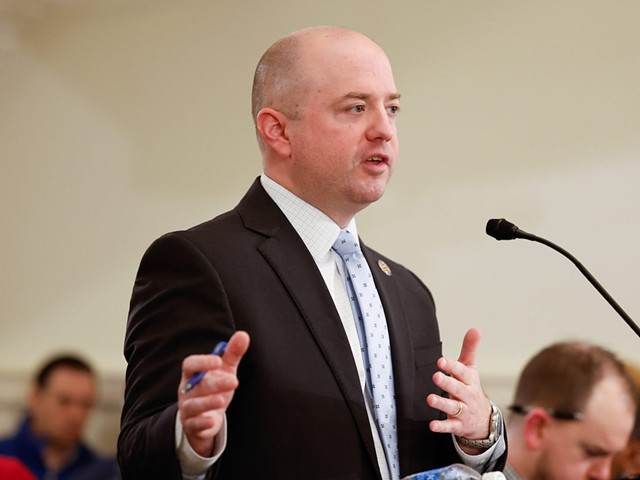
Q&A: John Cranley

Mayoral candidate speaks on campaign, parking deal, streetcar

For better or worse, Cincinnati will have to deal with another major election cycle for City Council and the mayor’s office in 2013. With four-year terms for City Council recently approved by voters, the 2013 election could play one of the most pivotal, long-term roles in Cincinnati’s electoral history. 

But what most people know about the candidates and issues is typically given through small fragments of information provided by media outlets. At CityBeat, we do our best to give the full context of every story, but just once, we decided to give the candidates a chance to speak for themselves through a question-and-answer format. (Update: Since this article was published, CityBeat interviewed Democratic mayoral candidate Roxanne Qualls for another Q&A here.)

First up, mayoral candidate John Cranley, a former Democratic council member, has been one of the most outspoken critics of the recently announced parking plan (“City Manager Proposes Parking, Economic Development Plan,” issue of Feb. 20) and the Cincinnati streetcar (“Back on the Ballot,” issue of Jan. 23) in his mayoral campaign against fellow Democrat Vice Mayor Roxanne Qualls. CityBeat talked with Cranley about these issues and how they relate to the campaign to get his full take, all in his own words. The conversation (with some edits for readability) is below.

CityBeat: I know your campaign kick-off was last night. How did that go? Did it have good turnout?

John Cranley: It was awesome. We had over 300 people there. Very diverse crowd. It was just great.

CB: How do you feel about the campaign in general? It’s pretty early, but how do you feel about the local support you’ve been getting?

JC: It’s been overwhelming. People are rallying behind my progressive vision, and trying to stop privatization of parking meters to Wall Street. And trying to get focus back on neighborhoods, balance, equity, basic services for everyone, special attention to those in need and broad opportunities for the working poor. I think people are very excited for that message, and I’m finding support in every neighborhood of town.

CB: I noticed that a theme of your campaign is helping out neighborhoods by spreading the funding not just to downtown, but neighborhoods as well. Are you hoping to build support from those areas?

JC: I’m for fairness. I think that right now you have a disproportionate amount of money — $26 million over budget on the streetcar, yet they’re still proceeding with it — and the neighborhoods are forgotten about. But I want to see downtown flourish too, so it’s not like I’m one or the other. I want the whole city to do better. But I think there needs to be equity and balance.

CB: You just think the playing field isn’t leveled right now?

JC: Absolutely not. Right now they’re trying to raise parking meters in neighborhoods to build luxury apartments in downtown. If that doesn’t show you their values are out of whack, I don’t know what does.

CB: Speaking on that, the latest news is the city manager’s parking proposal, which he calls a “public-public partnership” that will boost economic development. What are your thoughts on it?

JC: The PR campaign that they’ve been putting out is very deceptive and willfully so. This is not a public plan; this is privatization to a Wall Street company. The only elements that matter to city control are control over rates and control over enforcement. The city has said repeatedly, dishonestly, that the city will maintain control over rates and enforcement, but neither one of those statements is true.

The rates are guaranteed to go up 3 percent a year for 30 years on a compounded basis. Prior to the recent increases in parking rates, the city hadn’t raised rates in 10 or 15 years. Right now, the elected officials — we live in a democracy, for now. Right now, City Council decides to raise rates, lower rates, maintain rates. If there’s a recession in the future, City Council can choose to reduce parking rates. There might be certain neighborhoods where you want to charge different rates over others depending on economic demographics of those areas. Right now, we have complete flexibility to change those rates. This plan gives Wall Street the right to raise rates by 3 percent every single year for 30 years.

The second thing is enforcement. I’m old-school where I believe that the government should be the one that has the potential of putting you in jail. Because if you don’t pay your parking tickets, you can be indicted and go to jail. Here, we’re giving away the power to issue tickets to a Wall Street company for 30 years. 

Not to mention due process concerns. What happens if you don’t believe you were late back to your meter? Who do you appeal to? You appeal to this company from Wall Street, who has a financial incentive to make you pay.

[Editor's Note: Meg Olberding, city spokesperson, told CityBeat the rate increase cap could be circumvented, but the decision would have to be unanimously approved by a board with four members appointed by the Port of Greater Cincinnati Development Authority and one selected by the city manager, then affirmed by the city manager, then get a final nod from the Port Authority. The 3-percent rate increase is also not automatic, and the Port Authority could decide to not take it up every year.

She also said Xerox, which is not a Wall Street company, would manage enforcement based on standards set by a contract with the Port Authority. Guggenheim, a Wall Street financial firm, is acting as underwriter and capital provider for the parking plan.]

On that point, how is it that there are public hearings next week and they haven’t released any of the contracts or documents for this transaction? They are going on a Power Point presentation, which is their talking points. Everyone is writing it as if it’s fact, yet the contract and the details haven’t even been released.

Roxanne is calling public hearings and expecting people to weigh in on a 30-year decision before the details are released to the public. How cynical is that?

CB: We might not know the details right now, but you think that shows a lack of transparency?

JC: Of course. I hope you guys will editorialize about that and stand up against privatizing and outsourcing the city to Wall Street.

CB: In the past, you and I talked about the next phase of the Smale Riverfront Park not having funding, which you pinned on the streetcar taking tax revenue that could be used for it. I couldn’t help but notice that it’s one of the things funded in the city manager’s parking proposal. Do you see that as evidence to your claim?

JC: Well, of course. They don’t have funding for the Riverfront Park. That’s why they’re selling the city’s parking meters. 

The bigger issue is it’s just fundamentally wrong to take an asset that is a recurring revenue stream for 30 years and try to monetize it today at the expense of the future generations. It’s giving Roxanne the ability to try to buy votes by playing Santa Claus before the election at the expense of the next generation.

CB: Another part of the plan is it’s expanding hours. Do you think that might hurt nightlife in Downtown? 

JC: Of course it’s going to hurt restaurants, nightlife and the Cincinnati Reds, not to mention the neighborhoods — Hyde Park, Mount Lookout, Clifton. They’re going to pay higher meters so they can pay off their friends to build luxury apartments in downtown. The equity of this is awful.

CB: Would you be willing to bring up a referendum on this deal?

JC: Absolutely. It’s such a selling-out of the city on a long-term basis, but I think the people should have the final say.

CB: I want to move onto the streetcar. Even for supporters of the streetcar, the delays are unnerving. The latest news is these construction requests came way over budget and they might cause more delays. How do you feel about it?

JC: It’s what we’ve been saying for a long time. A lot of people’s reputations have been attacked for having said that this thing would be over budget. I think a lot of people, including Roxanne, need to fess up that they’ve been misleading the public about this deal for years.

But the real issue is it’s $26 million over budget, it’s the tip of the iceberg, and it’s going to get worse. And Roxanne is continuing to spend money on the streetcar. She’s continuing to move forward. She still says she wants to get it done by the (2015 Major League Baseball) All-Star Game. She still says that she wants to pay for future phases. So it doesn’t really matter, from Roxanne’s standpoint, if it’s $26 million over budget. I think it’s too expensive, we can’t afford it, we shouldn’t be raising property taxes, etc. We should stop now and we should try to get our money back.

CB: One of the issues you’ve told me you have with the streetcar before is a lack of transparency. Do you think that’s catching up to the city in these budget surprises?

JC: Of course the lack of transparency is catching up to them. Not only is it the right thing to do what you’re doing with their money and government; it’s always the right way to manage money. When you hide problems, it always leads to greater expense later.

CB: We’ve thoroughly covered what you’re against. What positive visions do you have for the city and neighborhoods?

JC: I have lots. On my website, JohnCranley.com, I have my 10-point plan, which goes in great deal over my positive plan for the city. We need to focus on jobs and opportunities for the future. We need to partner with the venture capital and university entrepreneurship efforts in the city, and I’ll do everything in my power to help that. We need to work to improve our schools; what we need to do is get communities involved to adopt under-performing inner-city schools to improve the standards and opportunities. Third, we need to adopt my plan to reprogram existing federal dollars into job training and job opportunities to put people to work in building city’s infrastructure projects now. Those are probably the three major ones.

The good thing about Cincinnati is we have momentum, which is great. But we’re not getting better fast enough.

Update: This story was updated with comment from the city manager’s office to clarify how the parking plan’s rate cap will work and Guggenheim's role.


by German Lopez 02.20.2013 91 days ago
 
 
cover-kasich-2

Morning News and Stuff

Kasich gives State of the State, Dohoney's parking plan, county rejects bridge tolls

Gov. John Kasich gave his State of the State speech yesterday. Kasich focused on his budget proposal and jobs, and he urged lawmakers to take up the Medicaid expansion. Cleveland’s The Plain Dealer has a thorough report on the speech here. CityBeat gave an in-depth look at Kasich’s budget in this week’s cover story here.

City Manager Milton Dohoney Jr. proposed an ambitious parking and economic development plan yesterday. The 30-year plan, which Dohoney called a “public-public partnership,” will lease the city’s parking assets to the Port of Greater Cincinnati Development Authority to fund more than $100 million in projects around the city, including the I-71/MLK Interchange, Tower Place Mall and a high-rise that will house a downtown grocery store. As part of the deal, the city will retain control over parking rates, operation hours and the placement of meters.

The Kenton County Fiscal Court unanimously voted against tolls to pay for the Brent Spence Bridge project, reports WVXU. County residents are concerned the tolls will be a financial drain for commuters and travelers, but finding other sources of funding for the project has been an ongoing struggle.

An Ohio woman claims she was fired after voting for President Barack Obama in the 2012 election, reports Dayton Daily News. Patricia Kunkle’s lawsuit claims her former employer, Roberta “Bobbie” Gentile of Q-Mark Inc., threatened to fire workers if Obama won election and that Obama supporters would be first on the list.

John Cranley, former Democratic council member, will formally launch his mayoral campaign today. The kick-off will be at 20th Century Theater in Oakley at 5:30 p.m. Cranley’s main opponent will most likely be Vice Mayor Roxanne Qualls, a fellow Democrat. The two Democrats have split on one issue: the streetcar. Qualls supports it, while Cranley is against it. CityBeat covered the streetcar and how it relates to the mayor’s race here.

The University of Cincinnati is conducting research for how to locate food deserts, reports the Business Courier. Professor Michael Widener is looking at where people live and work, with a focus on how many people are able to stop by a grocery store after a workday.

Failing to yield caused 37,475 crashes in 2012, according to the Ohio State Highway Patrol. Altogether, the crashes killed 187 people and injured 23,353. Young drivers, aged 16 to 25, were at fault for 30 percent of the crashes — nearly twice as high as those aged 26 to 35, who caused 16 percent of accidents. The full county-by-county report is available here.

UC will spend $2 million on design work for Nippert Stadium, reports WLWT. UC hopes the work will attract an Atlantic Coast Conference invitation.

Popular Science has a demonstration of scientists teaching language to a childlike robot.


by German Lopez 02.15.2013 96 days ago
 
 
kasich_2

Morning News and Stuff

GOP questions Medicaid expansion, Qualls' streetcar concerns, council backs efficiency

State legislators, particularly Republicans, have a lot of questions regarding Gov. John Kasich’s Medicaid expansion. Legislators are worried the state won’t be able to opt out of the expansion if the federal government reneges its funding promise, raising potential financial hurdles. As part of Obamacare, the federal government pays for 100 percent of the Medicaid expansion for the first three years, and the share phases down to 90 percent after that. Kasich’s budget includes a trigger — called a “circuit breaker” — in case the federal government ever funds less than currently promised. A study from the Health Policy Institute of Ohio found the Medicaid expansion could insure nearly 500,000 people and generate $1.4 billion by raising revenue and shifting funding burdens from the state to federal government.

Vice Mayor Roxanne Qualls, a longtime supporter of the streetcar, is getting concerned about some of the problems surrounding the project. In a memo to the city manager, Qualls suggested putting the streetcar project through “intensive value engineering” to bring the project’s budget and timetable back in line — preferably in time for the 2015 Major League Baseball All-Star Game. The memo was in response to streetcar construction bids coming in $26 million to $43 million over budget — a setback that could cause further delays or more funding problems.

With Councilman Chris Seelbach’s strong support, City Council passed a resolution urging the state government to maintain its energy efficiency standards. State Sen. Bill Seitz, a Cincinnati Republican who chairs the Public Utilities Committee, sent out a memo Feb. 1 that pledged to review the state’s standards, causing much concern among environmental groups.

Tolls for the Brent Spence Bridge could be as low as $2, according to financial consultants involved with the project. The tolls will help pay for the massive rehabilitation project, which gained national attention when President Barack Obama visited Cincinnati to support rebuilding the bridge.

State Democrats and Republicans have some questions about the governor’s Ohio Turnpike plan. Some Democrats are concerned the state government won’t actually freeze toll hikes at the rate of inflation for EZPass users. Others are worried about language in the bill. The plan leverages the Ohio Turnpike to fund a statewide construction program.

The man accused of dumping fracking waste into the Mahoning River in Youngstown was arrested and charged with violating the Clean Water Act.

Dayton wants to help illegal immigrants who are victims of crime. The Dayton City Commission approved a $30,000 contract with a law firm to help potential victims. CityBeat previously covered the recent struggles of children of illegal immigrants in Ohio.

A Dayton Daily News report found Ohio overpays unemployment compensation claims by millions of dollars.

The University of Cincinnati is launching a technology incubator for mobile apps.

In his State of the County address yesterday, Commission President Chris Monzel said Hamilton County is “on the move and getting stronger.”

Attorney General Mike DeWine and officials from other states announced a $29 million settlement with Toyota over the unintended acceleration debacle. Ohio will get $1.7 million from the settlement.

A meteor flew over Russian skies and exploded with the strength of an atomic bomb Friday, causing a sonic blast that shattered windows and injured nearly 1,000 people.

Scientists engineered mice that can’t feel the cold. Certain people on CityBeat’s staff would probably do anything for this superpower, but scientists are probably going to use it to make better pain medication.


by German Lopez 02.14.2013 97 days ago
Posted In: Budget, 2013 Election, News, Mayor, Streetcar at 05:09 PM | Permalink | Comments (3)
 
 
qualls

Qualls Raises Concerns Over Streetcar Project

Streetcar construction bids come over budget

The latest batch of bad streetcar news provoked a harsh memo to the city manager’s office from Vice Mayor Roxanne Qualls, a Democrat who has long supported the $125 million transit project. In the memo, Qualls wrote about “serious concerns” regarding the project’s costs and timetable.

“Whether people support or oppose the streetcar project, everyone has a vested interest in getting the most for our public dollars and in having the highest confidence in the management of the project,” Qualls wrote. “While a council majority has continued to support the project, council has not given the administration a ‘blank check.’”

The memo suggested putting the streetcar project through “intensive value engineering” to bring the project’s budget and timetable back in line — preferably in time for the 2015 Major League Baseball All-Star Game.

The memo is in response to streetcar construction bids coming in $26 million to $43 million over budget. Meg Olberding, city spokesperson, says the bids leave the city with two options: The city could take up the current bids, which could have their costs brought down upon further review, or the city could reject the bids and rebid the project, which would cause delays. But Olberding also cautions that the administration is still working on fully reviewing the bids — a process that could take weeks or longer.

Qualls is running for mayor against John Cranley, a former Democratic council member. Cranley has been a vocal opponent of the streetcar project — creating a strong contrast between the two candidates that has placed the streetcar in the center of the 2013 mayoral race.

Earlier today, Cranley held a press conference asking the city to halt the streetcar project. In a statement, he argued it is “irresponsible” to continue work on the streetcar in light of the higher costs.

CityBeat previously covered the streetcar and how it relates to the race between Qualls and Cranley (“Back on the Ballot,” issue of Jan. 23).


by German Lopez 02.14.2013 97 days ago
Posted In: 2013 Election, News, Environment, Energy, City Council at 04:22 PM | Permalink | Comments (0)
 
 
news_chris_seelbach

City Pushes Energy Efficiency Standards

Council resolution embraces Cincinnati’s past clean energy successes

With a resolution passed Wednesday, City Council is urging state legislators to maintain the energy efficiency standards that helped drive Cincinnati’s clean energy growth.

State Sen. Bill Seitz, a Cincinnati Republican who chairs the Public Utilities Committee, sent out a memo Feb. 1 that suggested “a meaningful review” of the state’s energy efficiency standards, which were previously established by Senate Bill 221 in 2008 and Senate Bill 315 in 2012. In the memo, Seitz wrote he was open to freezing and weakening some of the established standards.

Environmental groups responded by calling on local governments to defend the standards. In Cincinnati, the call was picked up by Councilman Chris Seelbach, who touted the city’s past clean energy efforts in a statement: “Cincinnati has made great strides in energy efficiency by seeking cost savings while boosting our city’s green image. Energy efficiency is helping Cincinnati support a double bottom line of environmental and economic sustainability, and we endorse full implementation of our state efficiency law.”

The city estimates it saves $1 million a year on energy bills because of the law’s efficiency programs, which includes upgrades and weatherization projects.

Christian Adams, a clean energy associate of Environment Ohio, praised Cincinnati for passing the resolution in a statement: From efficiency to solar, Cincinnati [is] a state leader on clean energy, and it’s proving to be a win-win-win for consumers, the environment and the economy. If state lawmakers want to change our clean energy law, they should follow Cincinnati’s lead and double-down on wind, solar and energy efficiency.”

In a previous report, Environment Ohio claimed Cincinnati could become the solar energy capital of the region. CityBeat covered the report and Cincinnati’s — particularly the Cincinnati Zoo’s — success with solar energy (“Solar Cincinnati,” issue of Dec. 19).


by German Lopez 02.14.2013 97 days ago
Posted In: Casino, Budget, News, 2013 Election, Mayor, Streetcar at 10:14 AM | Permalink | Comments (0)
 
 
streetcar

Morning News and Stuff

Cranley calls for streetcar's end, SORTA obtains federal grant, casino gets state approval

John Cranley is calling for the city to halt progress on the streetcar after a report from The Cincinnati Enquirer revealed the city’s construction bids are $26 million to $43 million over budget. City Manager Milton Dohoney says the city might throw out the bids and start the bidding process again, but no final decision has been made yet. But Cranley argues the city has no leverage over bidders because it already bought the streetcars. In CityBeat’s in-depth look at the streetcar, Meg Olberding, city spokesperson, said the cars had to be bought early so they can be built, tested and burned into the tracks while giving staff enough time to get trained — a process that could take as long as two and a half years. The city also cautions that sorting through the bids will take a few more weeks.

The Southwest Ohio Regional Transit Authority (SORTA) landed a $2.5 million grant to purchase seven new buses. U.S. Sen. Sherrod Brown, an Ohio Democrat, yesterday announced SORTA had won the competitive grant from the U.S. Department of Transportation. The new buses will replace old ones that are no longer good for service.

The Horseshoe Casino got approval from the state yesterday despite fears of bankruptcy surrounding the casino’s parent company. As a precaution, the Ohio Casino Control Commission is requiring Caesar’s, the troubled company, to undergo annual financial reviews and notify the commission of any major financial plans, including any intent to file bankruptcy. Caesar’s is currently $22 billion in debt.

Ohio legislators have a lot of questions about Gov. John Kasich’s new school funding formula. Kasich claims his formula levels the playing field between poor and wealthy schools, but Rep. Ryan Smith, a Republican, pointed out his poor Appalachian district is getting no money under the formula, while the suburban, well-off Olentangy Schools are getting a 300 percent increase. In a previous glimpse at the numbers for Cincinnati Public Schools (CPS), CityBeat found the funding increases aren’t enough to make up for past cuts — largely because of the phaseout of tangible personal property reimbursements.

Another report found low-performing schools could be forced to outsource teaching. The new policy has aggravated some local officials. 

Kasich’s budget will apparently benefit the state’s mentally ill and addicted. Mental health advocates said the budget will expand treatment, housing and other services. Most of the benefits will come from the Medicaid expansion.

CPS says it will not lose any funding over the state auditor’s attendance scrubbing report. The report, released Tuesday, found CPS had been scrubbing attendance data, but the school district claims errors were not intentional.

Hamilton County Board of Commissioners President Chris Monzel will give the State of the County address later today.

Ohio Third Frontier approved $3.6 million in new funds to support Ohio innovation. About $200,000 is going to Main Street Ventures, a Cincinnati-based startup accelerator.

Cincinnati Art Museum named an interim curator: Cynthia Amneus.

Covington is getting a new city hall.

New evidence shows lab testing on mice may not be helpful for humans. Apparently, mice and human genes are too different for treatments to be comparable.


by German Lopez 02.11.2013 100 days ago
Posted In: 2013 Election, Mayor, News, Education, Economy, CPS at 09:52 AM | Permalink | Comments (0)
 
 
qualls

Morning News and Stuff

Qualls calls for debates, CPS serves as model, Kasich's education plan breaks promises

In response to Democratic mayoral candidate John Cranley’s call for a debate, the campaign for Vice Mayor Roxanne Qualls, another Democratic candidate for mayor, is calling both campaigns to schedule a series of debates. Jens Sutmoller, Qualls’ campaign manager, said in a statement, “Vice Mayor Qualls believes the citizens of Cincinnati deserve a robust series of public debates between the two final 2013 Mayoral candidates. She looks forward to articulating her optimistic vision of Cincinnati’s future and the investments we need to make in our neighborhoods and city to achieve a welcoming city of opportunity for all our citizens.”

Cincinnati Public Schools (CPS) are being used as a model by other schools around the state and country. Other schools are particularly interested in Cincinnati’s community learning centers, which provide services not directly related to education, including health clinics, mental health counselors, tutoring programs and extensive after-school programs. The approach is being praised for making schools serve the greater needs of communities. CityBeat wrote about CPS and its community learning centers here.

Steve Dyer, an education policy fellow at Innovation Ohio, says Gov. John Kasich’s school education plan actually does the opposite of what Kasich claimed: “However, after examining the district-by-district runs produced by the Kasich Administration yesterday (which I posted at Innovation Ohio earlier), what is clear that even without eliminating the guaranteed money Kasich said he wants to eliminate soon, kids in the poorest property wealth districts in the state will receive 25 cents in additional state revenue for every $1 received by kids in the property wealthiest districts.” A CityBeat analysis found the education plan increases funding for Cincinnati Public Schools, but not enough to make up for past cuts.

The University of Cincinnati, Cincinnati State and Miami University are getting slight increases in funding under Kasich’s higher education funding plan. The plan increases overall higher education funding by 1.9 percent, with UC getting 2.4 percent more funding, Cincinnati State getting 4 percent more and Miami getting 1.8 percent more. The increased funding should be helpful to Miami University, which recently initiated $99 million in summer construction and renovation projects. Historically, Ohio has given its universities less funding per pupil than other parts of the country.

An appeals court ruling could put the Anna Louise Inn back at square one. On Friday, the Ohio First District Court of Appeals affirmed most of a lower court’s ruling against the Anna Louise Inn, but it sent the case back down to the lower court on a legal technicality. The ruling means the case could restart, but Tim Burke, the inn's attorney, claims the Anna Louise Inn has already done what the appeals court asked. For CityBeat’s other coverage of the Anna Louise Inn, click here.

Media outlets are finally picking up the story about illegal immigrants and driver’s licenses. Gongwer wrote about it here, and The Columbus Dispatch covered it here. CityBeat originally wrote about the story last week (“Not Legal Enough,” issue of Feb. 6).

Following the board president’s comparison of Adolf Hitler and President Barack Obama, the Ohio State Board of Education is set to discuss social media. CityBeat wrote about Board President Debe Terhar’s ridiculous Facebook post here.

Remember the Tower Place Mall! Two tenants are holding out at the troubled mall as they look for different downtown locations.

Ohio Attorney General Mike DeWine wants everyone to know he’s still cracking down on synthetic drugs.

The pope is stepping down.

How kids draw dinosaurs is probably wrong.


by German Lopez 12.18.2012
 
 
tedstrickland

Morning News and Stuff

Strickland calls for gun control, Kasich to loosen gun rules, Mallory rebuts streetcar claims

Former Ohio governor Ted Strickland, who rose to the governorship with the help of the National Rifle Association, says gun rights and gun control can co-exist. The claim is in light of the massacre at Sandy Hook Elementary School in Newtown, Conn., which killed 20 children and six adults. Many have called for stricter gun control in light of the past year’s bouts of gun violence, but Republicans are typically opposed to such proposals. A recent poll from The Washington Post and ABC News found 59 percent of Americans support banning high-capacity ammunition clips, much like the ones used in the Newtown shooting. Another 52 percent back the ban of semi-automatic handguns. 

Still, Gov. John Kasich isn’t changing his mind on the Second Amendment. He says he will sign a bill that allows guns in the Ohio Statehouse parking garage. The bill will also change the definition of an unloaded gun, allowing gun owners to carry loaded clips in their vehicles as long as they are in a separate compartment from the gun, and make concealed carry permits from other states easier to validate in Ohio.

Despite denials from city officials, mayoral candidate John Cranley and Councilman Chris Smitherman insist city government is trying to use the transit fund to fund the streetcar. But Mayor Mark Mallory in an op-ed for The Cincinnati Enquirer said it will not happen. Mallory said the dispute dates back to a lawsuit filed by Southwest Ohio Regional Transit Authority (SORTA), which runs the Metro bus system. The lawsuit demands transit funds be solely dedicated to SORTA.

Cincinnati’s U.S. Rep. Steve Chabot has vowed to continue trying to kill the streetcar. Even though voters have approved of the streetcar twice, Chabot, who also represents Warren County in district boundaries that were redrawn by Republicans, says he would rather focus federal funding on other projects, like the Brent Spence Bridge.

A conservative northern Kentucky lawmaker is supporting a bill that expands prisoners’ rights to DNA testing. The bill would allow a Cincinnati man to push for DNA testing that he claims will exonerate him of a 1987 rape and murder in Newport. Ky. Sen. John Schickel argued, “If DNA testing is good enough to send you to prison it should be good enough to get you out of prison.”

Cincinnati-based Fifth Third Bank bought another $100 million in stock from Credit Suisse International. The deal is part of a larger program to buy back 100 million shares.

Cincinnati State is in line to obtain $123,000 from the state government. The funding could create 51 new or expanded co-op jobs.

The United Way of Greater Cincinnati announced $50.7 million in investments for 2013, a slight increase from 2012. The increase will help boost funding to prepare children for kindergarten by 5 percent. It will also fund 288 programs at 146 agencies, with seven becoming new United Way agency partners.

The Prince Hall Shriners, which describes itself as “the world’s oldest African-American fraternal organization,” is returning to Cincinnati in 2015. The convention was in Cincinnati in 2011.

Duke Energy’s local management is being shaken up. Jim Henning will take over as president for Duke Energy Ohio and Kentucky.

Ohio Board of Regents Chancellor Jim Petro is retiring.

Did you know our solar system is sort of like a phoenix? It apparently rose from the cumulative ashes of countless stars, not one supernova.


by German Lopez 12.17.2012
Posted In: Gun Violence, News, 2013 Election, Mayor, Budget, Economy at 09:47 AM | Permalink | Comments (0)
 
 
dawn hochsprung

Morning News and Stuff

More on Newtown massacre, City Council passes budget, Dillingham to run for council

By now, most of you have heard there was another horrible mass shooting, this time in Newtown, Conn., that resulted in the death of 20 children and six adults. While everyone is hoping this is the last time the nation has to deal with an event of unspeakable horror, it is only a possibility if we agree to do something about it. That means remembering the heroes who risked their lives and, in some cases, died that day. That means not letting the media and public drop the issue, as has been the case in the past. That means looking at more than just gun control, including mental health services. The Washington Post analyzed what “meaningful” action on gun control would look like, and the newspaper also disproved the idea Switzerland and Israel are “gun-toting utopias.” President Barack Obama also spoke on the issue at a vigil Sunday, calling for the nation to do more to protect people, particularly children, from violence. The full speech can be watched here.

City Council approved its 2013 budget plan Friday. The budget relies on the privatization of city parking assets to help plug a $34 million deficit and avoid 344 layoffs. The budget also nixed the elimination of a tax reciprocity for people who lived in Cincinnati but worked elsewhere and paid income tax in both cities, and it continued funding the police department’s mounted unit. As a separate issue, City Council voted to increase the property tax by about 24 percent, reversing a move from conservatives in 2011. CityBeat wrote about budgets at all levels of government and how they affect jobs here.

Michelle Dillingham, who was an aide to former city councilman David Crowley, will seek Democratic support in a run for City Council. Dillingham promises to tackle “industry issues of mutual interest" to business and labor and “transportation funding, family-supporting wages and workforce development.”

At a recent public hearing, mayoral candidate John Cranley proposed a “very easy” plan for the city budget. Only problem: His plan doesn’t work. In an email, Cranley said he stands by his ideas, but he added he was working with limited information and his statements were part of a two-minute speech, which “requires brevity.” He also claimed there are cost-cutting measures that can be sought out without privatizing the city’s parking assets and gave modified versions of his ideas regarding casino and parking meter revenue.

Judge Robert Lyons, the Butler County judge who sealed the Miami rape flyer case, is standing by his decision.

The Greater Cincinnati area is near the top for private-sector growth. 

Jedson Engineering is moving from Clermont County to downtown Cincinnati, thanks in part to an incentive package from City Council that includes a 45 percent tax credit based on employees earnings taxes over the next five years and a $300,000 grant for capital improvements. The company was a Business Courier Fast 55 finalist in 2008 and 2009 due to its high revenue growth.

Gov. John Kasich’s Ohio Turnpike plan is getting some support from Toledo Mayor Mike Bell, but others are weary. They fear the plan, which leverages the turnpike through bonds for state infrastructure projects, will move turnpike revenues out of northern Ohio. But Kasich vows to keep more than 90 percent of projects in northern Ohio.

Gas prices are still falling in Ohio.

U.S. House Speaker John Boehner is making some concessions in fiscal talks. In his latest budget, he proposed raising taxes on those who make more than $1 million a year.

One beagle can diagnose diseases by sniffing stool samples.


by German Lopez 12.14.2012
Posted In: 2013 Election, Mayor, Budget, News, Privatization at 12:15 PM | Permalink | Comments (1)
 
 
cranley wiki copy

Fact Check: Cranley's 'Very Easy' Budget Plan

Mayor candidate’s budget suggestions are inadequate, impossible

Former Democratic city council member John Cranley is kicking off his 2013 mayoral campaign by getting involved in budget talks. In a public hearing at City Hall last week, Cranley tried to provide an alternative to privatizing the city’s parking assets, which City Manager Milton Dohoney has suggested to pay for $21 million of the city’s $34 million deficit.

“It’s not the citizen’s job to balance the budget, but let me make it very easy for you,” Cranley said. “You have $12 million in casino money that can be used but is currently being used on pet projects, like street sculptures. The parking meters themselves produce $7 million a year. That’s $19 million. And $5 million for garbage cans. That’s $24 million. You only need ($21 million) to cancel the parking privatization plan, so I got you $3 extra million to spare.”

In short, Cranley's alternative to parking privatization is using $12 million from casino revenue, $7 million from keeping parking meters under city ownership and $5 million saved from not purchasing trash carts.

So how viable are Cranley’s ideas? In a memo, Dohoney’s office responded. The memo points out that casino revenue is currently estimated at $7.2 million, not $12 million, and $1.3 million is already included in the budget for Focus 52, a neighborhood redevelopment project. That leaves casino revenues $6.1 million short of what Cranley proposed.

Regarding parking meters, Dohoney’s office says revenue from parking meters is restricted to fund “operations and maintenance in the right-of-way.” The memo says City Council could authorize using the money to plug the deficit, but it would then have to find alternatives for funding operations and maintenance.

Even the trash cart proposal doesn’t work. Not buying trash carts would only save $4.7 million, not $5 million. And the plan, which is part of the city’s effort to semi-automate trash collection, is in the general capital budget, not the general fund operating budget that’s being debated. The memo concludes, “If the trash carts are not purchased, the funds would not be available to close the gap because this is a capital budget expenditure and resources supporting the capital budget cannot be used in the operating budget.”

In other words, Cranley’s “very easy” budget plan isn’t just difficult; it’s a mix of inadequate and impossible. If CityBeat was PolitiFact, Cranley’s suggestions would probably get him a “Pants on Fire” label.


Close
Close
Close