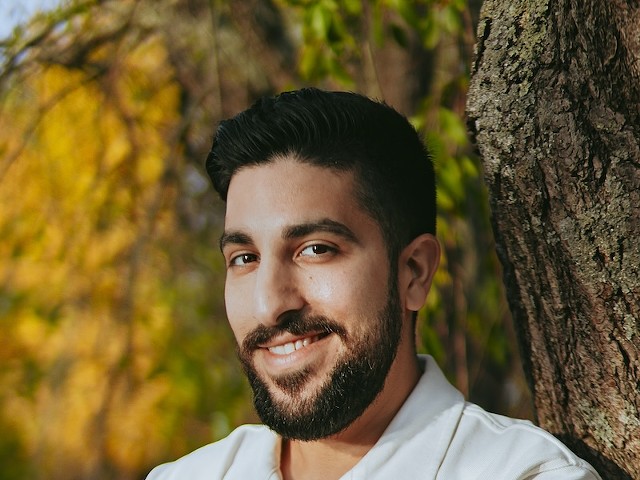
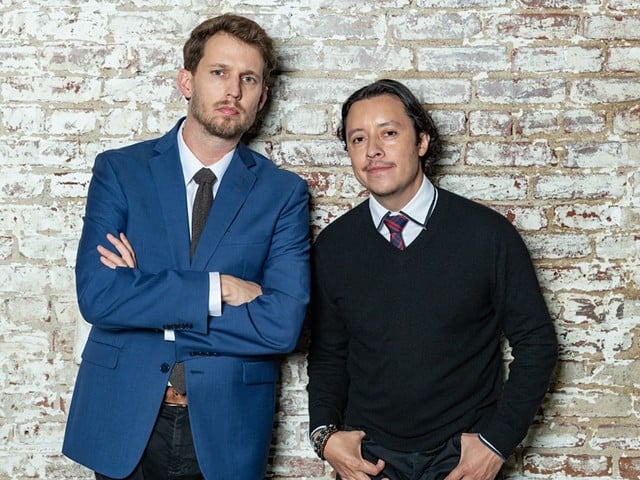
Singer/songwriter Griffin House comes back to Cincinnati tonight for an 8 p.m. show at the 20th Century Theatre in Oakley with local guests, the Folk Pop duo Ellery. The Springfield, Ohio, native (currently living in/working out of Nashville) has long received critical acclaim for his albums and his numbers commercially go up with each new release. He's coming to town as part of his spring/summer tour, just two days before his 32nd birthday. House turned down a golf scholarship to attend Ohio University and instead went to Miami University in Oxford, where he first taught himself to play guitar and write songs.
Here's the video for House's Tom Petty-esque song about the Nashville floods, the Gulf oil spill and war, "Head for the Hills." The song was recent spotlighted in a Huffington Post story titled "When Art and Activism Spill Over in Nashville," in which House discusses what led him to write the song and make the video.
• Indie Rock band Cursive — from Omaha and recording artists on Saddle Creek Records, home to Bright Eyes — pull into Bangarang's of Covington tonight for a 7 p.m. show. Opening up are Conduits and Cymbals Eat Guitars. Tickets are $16.
Here's a track, "Wowowow," from Cursive latest album, February's I Am Gemini. Read more here and click here for a free download of the song (and another, "The Sun and Moon").
• Columbus born/Chicago based Avant/Indie foursome Loyal Divide play a free, 10 p.m. show at MOTR Pub tonight in Over-the-Rhine. Way Yes opens. Check out this groovy video for "Vision Vision."
• Other solid bets: The Comet has Buffalo Killers and Alabama-based labelmates Lee Bains III and the Glory Fires (10 p.m.) for free; Ugly Radio Rebellion pays tribute to Zappa at Stanley's Pub at 9:30 p.m. ($5); area band Sohio plays the All Night Party's first Third Thursday concert, bringing local original music to Mt. Adams' AliveOne bar (free; 9 p.m.); and two of Cincy's finest Folk acts — The Tillers and Shiny and the Spoon — play the Cincinnati Zoo's free Tunes & Blooms show tonight, starting at 6 p.m.
Click here for all of tonight's live music options.
This Friday night, Cincinnati's finest Americana outfit, Magnolia Mountain is set to celebrate the release of its fantastic new LP, Town and Country, easily one of the best locally-produced albums of the year. Frontman Mark Utley and his bandmates will party in Town and Country's honor by performing tomorrow at the Ballroom at the Taft Theatre. The all-ages show kicks off at 8 p.m. with guests Jeremy Pinnell and the 55's, Chuck Evanchuck and the Old Money and Chuck Cleaver and Lisa Walker from Wussy performing a duo set.
Click here to read this week's CityBeat feature on Magnolia Mountain. Below is the full interview with Utley.
CityBeat: Tell me about the new album. What was your mindset going into it — did you have a good sense of what you wanted to do right away? Did it end up as you planned?
Mark Utley: I think the goal with all the Magnolia Mountain records has been to document where we were as a band and where I was as a songwriter at those specific times. The two years since we released Redbird Green have been a real rollercoaster ride for me personally — really high highs and very low lows — and I think that shows up in the songs. I tend to write fairly literally. It was a difficult record to make but it feels great to have made it. They’re the best songs I’ve ever written and it’s the best record we’ve made yet.
We didn’t do a Magnolia Mountain album in 2011, mostly because of how long (the benefit project) Music for the Mountains took to put together. So we had a ton of songs written and I was anxious to get back in the studio. I wanted to expand on what we did on Redbird Green in almost opposing directions. The song “Hellbound Train” from that record was a huge audience favorite, but it wasn’t really like any other song on that album. So I wanted to write some more in that direction, but I was also writing songs on the banjo where it seemed like all I wanted to do was keep stripping things off until I got to the bare essence of them.
CB: What's the significance of calling the album "Town and Country"?
MU: It’s a nod to that dichotomy, the rockier stuff set right alongside the folkier songs. It’s interesting to me, because the original template for this band was something along the lines of Neil Young’s Live Rust record, where we would start out a show almost whisper-soft with folky acoustic stuff, and by the end of the night we’d be playing riff-heavy rock songs on electric guitars. But the earlier MM lineups didn’t have all of that in them. This lineup does, and I love it.
CB: You mentioned that you had at least a twinge of concern that perhaps Town and Country was almost too varied. That's something I've always loved about Magnolia Mountain, yet it annoys me sometimes when other bands do it. I think the key is you have the ability to make it still sound like Magnolia Mountain; you never lose context when you're listening. Is it fair to say you had those concerns?
MU: I don’t think I was afraid it would be too varied, but I did (and do) have concerns that the record might alienate some earlier fans by incorporating too many different styles and sounds. But I’m hoping that other people will feel like you do, that it all still feels like part of a legitimate whole. Because I don’t write in different styles as some sort of genre exercise, I write like this because all these styles of music are just part of what I love and who I am.
Patterson Hood of Drive-By Truckers made a name for himself and his band by exploring “The Southern Thing,” meaning all the contradictions and the dynamic of growing up in the modern South and how other people see that and how you see yourself. Well, it hit me a while ago that so much of the music that gets termed “Americana” or “AltCountry” or whatever, is kind of “The Midwestern Thing.”
I mean, think about it, I grew up in southern Indiana and I’ve lived here in southern Ohio for over 20 years. We’re on the border of north and south, our ears hear a mixture of Rock and Pop and Country and R&B every day growing up. We hear phrases like “world’s biggest small town” tossed out as compliments and as urban as we try to be sometimes, our backgrounds are often very blue collar, very working man, very rural, even.
I think Magnolia Mountain is very much about all that, and I couldn’t be prouder of it.
CB: This one will be on vinyl as well, correct? What's with your dedication to the vinyl release? Do you personally feel your own music sounds better on vinyl than, say, a CD or digital file?
MU: I think pretty much everything sounds better on vinyl. I’m so happy vinyl records are coming back and I’m on cloud nine that all three of our records are available in that format. There’s nothing like that sound, that feel of the album in your hands, dropping the needle in the groove and looking at the artwork and the liner notes while you listen. It’s a ritual. It’s magic.
CB: When someone asks you what your band sounds like, and it's someone who might not have a great grasp on musical styles beyond the surface ones, what do you say?
MU: It kind of depends on if they have any grasp at all. I usually start with words like “rootsy” or “Americana” and if their eyes gloss over I’ll default to “Folk” or “Country." Or change the subject. I accepted long ago that the vast majority of the population doesn’t live or die by music the way I always have, so I don’t hold it against people for not catching obscure musical references or being well-versed in sub-genres. I’m just trying to find words or chords that people respond to no matter what their musical pedigree.
CB: Do you often say you play Country music, or is it just not worth the hassle of explaining that it's not THAT kind of Country music?
MU: I do use the term, although sparingly, and usually with a lot of hyphens. A lot of people associate Country music with a laundry list of negative connotations, and sometimes you can’t overcome that. But that’s kind of their problem and I try not to make it mine.
As far as the curse of “New Country,” yeah, I hate most of it as much as the next guy, but I also know that a lot of people listen to it because they don’t really have the time or the inclination to dig any deeper. But I also think that most people, no matter what their background or their musical preconceptions, tend to recognize honesty, real emotion, and lack of bullshit when it’s presented to them and that’s what I want to present to an audience.
CB: So how many musicians are currently in Magnolia Mountain? It seems you have had a fairly steady revolving door of co-players in the group with you, though, again, there's never a huge difference from lineup to lineup. Tell me a bit about who you’re playing with now?
MU: We’re still at eight, where we’ve been for a long time, but there are four new faces joining four original members in the Town and Country line-up: Renee Frye on vocals, Jeff Vanover on guitar, Todd Drake on drums, and Kathy Woods on fiddle, joining me, vocalist Melissa English, bassist Bob Donisi, and Bob Lese on mandolin and harmonica. All four of the new folks came in at roughly the same time, and fortuitously enough, right at the beginning of the Town and Country recording sessions, so they all had the opportunity to put their stamp on the record, and boy, did they ever.
I couldn’t be happier with how they’ve all worked out. They’re such incredible players and singers and great people to know and spend time with. For whatever reason, this version of the band feels the most comfortable in its own skin and I love that. The audiences seem to sense it, too. The new stuff is going over great live.
CB: How do rehearsals work? How frequently do you all get together? it would seem to be a logistical headache, at the very least.
MU: We rehearse once a week at my palatial Price Hill estate. We move the dining room table out of the room and set up in a circle. Some of us amplified, some of us not. It’s pretty low key, kids and dogs and cats coming and going. Usually everybody’s there every week. That’s how we learn so many new songs all the time, originals and covers. The process never really stops.
CB: The video for “The Hand of Man” and the Music For the Mountains benefit compilation have gotten the band and the cause of stopping mountaintop removal mining a lot of attention. Do you have more plans related to that or another cause in the works?
MM: Assuming the new location of the Southgate House is up and running by then, I’d like to do another multi-artist “Music for the Mountains” benefit concert in the fall. I don’t have the energy for another compilation album right now, but maybe down the road. The bad guys don’t sleep, you know, and neither can we. It’s just my little thing that I feel like I can do to help the folks that fight it day in, day out.
CB: Why was it important to you to become involved with the mountaintop mining campaign? Did the success the music had on getting the cause more attention give you a new perspective of the power of music?
MM: It just hit me as wrong on every conceivable level. It’s environmentally wrong, horribly short-sighted, and what it’s done to the residents of those areas is nothing short of criminal. It amazes me how well the coal companies have been able to use their corporate, political and financial muscle to hide it or dance around it for so long.
I do generally find, though, that once people become aware of what’s happening, either through a book or a speaker or a song, that they want it to stop, and that’s encouraging.
CB: The way people make and share and listen to music has changed a ton since your days with (Utley's late ’80s AltRock band) Stop the Car. Do you think Stop the Car would have been able to take things further if they had the resources you have now?
MU: Yeah, I do. For a couple of years there, at least, I would’ve put (Stop the Car) up against anybody, but we were so isolated back then, living in southern Indiana. It felt like we were playing in a vacuum. The kind of connections that the internet made possible were unheard of back then. I’m very thankful to have them now.
CB: When did you start listening to roots and Americana music, and start becoming a serious fan?
It was incremental. My dad listened to what you’d now call classic Country when I was growing up, but I couldn’t change the station quick enough. I’ve always been one to seek out the heroes of my heroes, though, and through bands like X, I started digging through older American Country and folk music. Hank Williams hooked me immediately. Woody Guthrie. Lead Belly. The Carter Family. You go deeper and deeper and deeper. It just never stops.
CB: What do you make of the (for lack of a better word) "trend" of a lot of musicians who would have fronted Punk Rock or Metal bands 10 years ago turning instead to Folk and Roots music these days? What do you think the draw is, particular to our times? Or do you think it's because kids are exposed to so many different styles nowadays?
MU: Well, they say that religion is the last refuge of a scoundrel, but perhaps it’s really Country music.
I don’t know, really, other than the fact that people can sense the authenticity of some of this music and perhaps they want to discover it more deeply, or co-opt it to their own ends, or try it on like a new suit of clothes. Whatever it is, and however the trends cycle in and out, I think people can tell who plays these kinds of music because it’s part of them and who’s just trying on the suit.
CB: Along those same lines, what do you think it is about American roots music that has given it such a fervent fan base overseas?That cult following for Americana in Europe and elsewhere seems to have been going strong for a long time now. I'm sure you've probably had more than a few nice reviews from the "foreign press."
MU: Europeans have always had an insatiable appetite for American musical forms. The British Invasion was nothing but them taking our music, making it their own and shooting it back at us.
Again, there’s the attraction of a sense of an authenticity, of something foreign and exotic, of times and places and people either long gone or vanishing inexorably. Our world is getting more and more controlled, more homogenized, more corporate, soulless and these Roots music forms are the antithesis of that.
CB: What's next up for the group? Is touring a possibility? Have you done radio campaigns and things like that in the past? Shopped music for licensing?
MU: We recently signed with a digital label from down south called This is American Music (TIAM). They’ll be handling the digital sales for all three of our records and we’ve contracted them to do promotion for Town and Country, as well. So we’ll finally have someone to take what we do and try and get it in front of people, which we’ve never had before.
We’re also working with a booking agent out of Nashville who’s setting up some tour dates for us, and we’ll be doing some trade off gigs with some of the other TIAM bands. It’s difficult with the size of our group, but we’re going to go out on the road as much as we can. I’m also doing more stripped-down gigs with Renee and Jeff as a trio, and we’re looking at touring with that configuration as well.
On this day in 1943, chemist Albert Hofmann embarked on the first LSD "trip." As a Swiss chemist working in the lab of Sandoz pharmaceutical company in Switzerland five years earlier, Hofmann was the first to create the psychedelic drug. But the psychedelic aspect of wasn't discovered until April 19, 1943.
On that day 69 years ago, Hofmann took .25 milligrams of lysergic acid diethylamide and not long after asked a coworker to take him home. He did, on a bike, and Hofmann kind of freaked out before he was able to reel in the anxiety and enjoy the "colors and plays of shapes that persisted … Kaleidoscopic, fantastic images surged in on me," as he later wrote.
Today is known as "Bicycle Day" because of the historic trip. Fans of psychoactive drugs have celebrated today by indulging in the chemical. (I sprinkled eight microdots into my morning coffee today, for example.) Tomorrow, of course, is 4/20, the pot-smokers celebration of … an established excuse to smoke pot all day. Saturday (April 21) is Record Store Day. That's quite a three-day holiday for the counterculture!
LSD has inspired a lot of music. It famously influenced The Beatles' mid-’60s musical expansion; their song "Lucy in the Sky with Diamonds" is widely considered an acid tribute, though John Lennon said it wasn't, the "L," "S" and "D" in the title merely a coincidence. The songs "She Said She Said" and "Tomorrow Never Knows" from Revolver were confirmed to be about the drug, though. The Jefferson Airplane's "White Rabbit" was another huge LSD song, and bands like Pink Floyd and The Grateful Dead became forever associated with the drug thanks to their trippy sounds.
There are, of course, as many songs about doing acid as their our Country tunes about lovin' America and drinking beer. More than anyone could ever listen to, in fact — from Syd Barrett's entire solo discography to some of today's top Dance music makers.
WHOA! Does everyone else see that? Please tell me everyone else sees that.
Here's a short film documenting (allegedly) Syd Barrett's first acid experience (NSFW, I suppose, but only for druggy silliness).
Happy birthday, tripping balls!
• Veteran Indie Rock cult heroes Low pull into town tonight to play the new Ballroom at the Taft Theatre. Formerly known for their "slow-core" approach, the Duluth, Minn., trio has expanded its sound greatly in recently years. Check out a clip from last month, filmed at The Guardian offices in the U.K., of Low explaining and performing the song "Witches."
Opening the 8 p.m. show is R. Ring, featuring Dayton, Kentucky's Mike Montgomery (thistle, Ampline) and Dayton, Ohio's Kelley Deal (The Breeders, The Kelley Deal 6000). The band is getting ready to release a full-length album, but here's a live clip of them performing the song "Hundred Dollar Heat" in Austin, Tex., during the recent SXSW fest.
R.Ring - Hundred Dollar Heat from Be Lie All on Vimeo.
Tickets for tonight's show are $12.• Santa Cruz, California-based Psych Rock band Sleepy Sun performs a free show tonight at MOTR Pub at 10 p.m. The band recently released its third album, Spine Hits. Check out what our Jason Gargano has to say about Sleepy Sun here. Space rockers White Hills, which recently issued Frying On This Rock through Thrill Jockey, open the show with their own brand of "fuzzed out psychedelia."
Here's the trailer for Sleepy Sun's Spine Hits, followed by a video for White Hills' "Pads of Light."
Sleepy Sun - Spine Hits trailer from ATP Concerts & Recordings on Vimeo.
White Hills - Pads of Light from Thrill Jockey Records on Vimeo.
Click on for more info on shows tonight by The Fray and Lucy Wainwright Roche.
Today in 1996, one of the greatest, most influential bassists ever, Bernard Edwards of Disco/Funk group Chic, passed away after contracting pneumonia while on tour in Japan.
My personal favorite bass line is Sly Stone's lick on "If You Want Me to Stay," but it's hard to deny the power of Chic's "Good Times," a Disco-era hit that helped lay the groundwork for Hip Hop. Edwards' bass line from the song is considered one of the most sampled pieces of music ever and it has been mimicked almost as often. Songs that wouldn't exist with Edwards' riff include Queen's "Another One Bites the Dust," Hip Hop trailblazers Sugarhill Gang's breakthrough "Rapper's Delight," Blondie's "Rapture," Daft Punk's "Around the World" and Wham!'s "Wham Rap! (Enjoy What You Do)" (hey, they can't all be winners).
R.I.P Bernard Edwards. And thanks for the groove.
Click on for Born This Day featuring Bez, Skip Spence, Grandmaster Caz and Robert Christgau.
Elvis Presley's Coat from Walter Williams on Vimeo
It's looking like the historic Emery Theatre on the border of Over-the-Rhine and Downtown is back in business as a full-time functioning venue. Bands like Magnolia Mountain and Pop Empire have been using the Theatre to film music video projects and, next Saturday (April 28), the Emery hosts the "Rock This Town" benefit concert for CityLink, which helps resident "break the cycle of poverty" by providing employment training and other assistance. The event's music will be provided several groups of business people who can play instruments or sing (modeled on the "Suits That Rock" concerts that benefit the Carnegie Arts Center in Covington).
On April 27, the Emery will host a dual album release party/concert in honor of two new releases from the label Ol Kentuck, run by SubPop recording artist and Northern Kentucky native Daniel Martin Moore. One of the albums is a vinyl release of producer/guitarist/composer Ric Hordinski's Arthur's Garden (read more about the album here).
The other is the first release from a duo project consisting of Moore and singer Joan Shelley (pictured) titled Farthest Field. The event will also feature readings from authors Silas House and Marianne Worthington (who wrote one of the most engaging press releases for the album I think I've ever laid eyes on for the duo's debut; click the "Bio" pdf link on this page to read it).
It's a great time to check out the Emery circa 2012 because the concert is also free and open to the public. (Rock this Town's tickets range from $35-$100 — for a great cause, of course.)
Here are two video clips (shot by photographer Michael Wilson with help on the audio side from Pop Empire) promoting the concert, with music from Moore and Shelley's Farthest Field (officially available May 8).
On this day in 1960, Rockabilly idol and Rock & Roll trailblazer Eddie Cochran died while on tour in the U.K. at the age of 21. On the night of April 16, Cochran was in a taxi when it blew a tire and crashed into a lamppost. Cochran was reportedly thrown from the vehicle when he dove on his girlfriend, songwriter Sharon Sheeley, to shield her and went out the car door that had been flung open. He died in the hospital the next afternoon. Also in the car was fellow rocker Gene Vincent, who survived the crash but suffered serious injuries.
It's hard to overstate how influential Cochran was in the development and increasing popularity of Rock & Roll. A member of the Rock and Roll Hall of Fame and Rockabilly Hall of Fame, Cochran is responsible for such indispensable Rock staples as "Summertime Blues" and "C'mon Everybody," and influenced and/or was covered by artists like The Who, The Rolling Stones, Led Zeppelin, Bruce Springsteen, T. Rex, Hendrix, Rush, The Sex Pistols … pretty much the entire first decade of Rock and Roll Hall of Fame inductees. Legend has it that Paul McCartney elbowed his way into John Lennon's The Quarrymen because his future bandmates were dazzled that he knew the chords and lyrics to Cochran's"Twenty Flight Rock."
It's rather stunning that someone who didn't live to see 22 could have such a profound effect on music. Here's a bit of Cochran featured in the 1956 film The Girl Can't Help It.
Click on for Born This Day featuring Redman, Maynard James Keenan, Liz Phair and Don Kirshner.
Tonight downtown, Arnold's host a free show by Hope For Agoldensummer at 7 p.m. The Athens, Ga., ensemble has been making beautiful Indie Folk music for nearly a decade, winning numerous awards from their hometown scene's Flagpole and Creative Loafing papers — they've scored five Best Folk/Americana awards in just the past seven years. The band has also received glowing press from non-Athenian sources, including the Washington Post, The New Yorker and NPR's All Songs Considered, which said HFA "has a knock for crafting gorgeous and often complex refrains, supported by utterly captivating arrangements.
The group — a sister act fronted by Claire & Page Campbell — has a new album, Life Inside the Body, due May 1. Check out Hope For Agoldensummer's video for the tune "4th Night," which won the group another local music award — for Best Music Video. And check out the groovy new tune, "Daniel Bloom," here via Philly radio outlet WXPN.