A Purcell Marian High School administrator was fired for declaring his public support for same-sex marriage. Mike Moroski, who was the assistant principal at the Catholic school, wrote about his support for LGBT equality on his personal blog. Following the blog post, Moroski claims he was given an ultimatum by the Archdiocese of Cincinnati to resign or recant his statements. CityBeat covered same-sex marriage and the amendment that could bring marriage equality to Ohio here.
A board vote failed to remove State Board of Education President Debe Terhar from her position. In response, Ohio Democrats filed a lawsuit seeking access to her cell phone and other records. Terhar has been receiving heavy criticism for a Facebook post that compared President Barack Obama to Adolf Hitler. CityBeat wrote about Terhar’s ridiculous Facebook post here.
Cincinnati Public Schools and Winton Woods City Schools were among nine city school districts found to be scrubbing attendance data by the state auditor. The school districts claim most the errors were simple mistakes, not intentional manipulation of data. Both the auditor and schools agree state policy is too confusing and must change.
The city of Cincinnati is beginning the process of sorting through construction bids for the streetcar. Three bids ranging from $71 million to $87 million have already come to light, according to The Cincinnati Enquirer. The bids could push up the price tag on the streetcar, but Meg Olberding, city spokesperson, cautions the process is barely starting. CityBeat covered the streetcar and how it relates to the mayor’s race here.
Cincinnati is speeding up the demolitions of condemned buildings this year, particularly buildings near schools and family zones.
A new report from the Ohio Department of Job and Family Services found employment in the shale industry was up 17 percent in the first quarter of 2012. Critics caution the jobs aren’t worth the risks — pointing to a number of environmental and health concerns related to hydraulic fracturing, or “fracking.” CityBeat wrote about fracking and its extensive problems here.
One in 25 students in Columbus schools are restrained or secluded. The state’s lax seclusion policies have been under heavy criticism in the past year following the discovery that school staff were using seclusion for convenience, not just to restrain students.
On Wednesday, Metro staff will be holding a security exercise meant to gauge counterterrorism capabilities. Metro bus service will not be affected.
The Horseshoe Casino pays homage to Liuzhou, China — Cincinnati’s sister city of 25 years.
The chief curator resigned from the Cincinnati Art Museum.
A Cincinnati woman was charged with helping her daughter beat up a student during a classroom brawl.
Curiosity is officially the first robot to drill another planet.
A new report from the state auditor found Cincinnati Public Schools (CPS) and Winton Woods City Schools were manipulating attendance data for the 2011-2012 school year, but the report seems to lay much of the blame on state policy, not just irresponsible school districts.
CPS and Winton Woods were cited among nine school districts by State Auditor Dave Yost for improperly withdrawing students from enrollment. More than 70 other schools had errors in their attendance reporting, but they were not found to be purposely manipulating — or “scrubbing” — attendance data.
The report largely focused on flaws in state policy that enable bad attendance reporting — particularly a single “count week” in October that encourages school districts to boost attendance during that one week and no other time in the school year.
“Kids count every day, all year long,” Yost said in a statement. “They deserve better than what we're giving them — Ohio's current system for measuring attendance and performance is obsolete and in too many places, filled with error and bad information and even outright fraud. It's amazing that it works at all, and sometimes, it doesn't.”
As a solution, Yost is calling on legislators to change school funding so it’s based on year-long attendance reporting.
The report also made 12 other recommendations, including increased oversight and monitoring, more programs for at-risk students, better training, use of automated data reporting, more accessibility to pertinent information for the Ohio Department of Education and clearer rules.
Winton Woods was one of the few schools to self-report issues to the auditor. Jim Smith, interim superintendent of Winton Woods, admits the school made mistakes and will make adjustments. But he says most of the issues were explained away as errors, not intentional data manipulation. Only four of the 15 issues couldn’t be reasonably explained, according to Smith.
Smith says the Education Management Information System (EMIS), which is used to report attendance data, is problematic for highly mobile
students, particularly in urban school districts. He argues the system
is too complicated and difficult to use for tracking such students.
In a Feb. 8 press release, Winton Woods claimed the reporting issues were related to confusion regarding expelled students, poor record keeping and a lack of well-defined procedures and reporting systems.
In an emailed statement, CPS Superintendent Mary Ronan wrote the school district made mistakes, but internal audits did not find evidence of data manipulation or scrubbing. She linked the errors to confusing state policy and issues with highly mobile students.
School attendance data is one of many ways states measure school performance, as required by the No Child Left Behind Act of 2001.
Update (Feb. 12, 10:29 a.m.): Originally, this story did not include comments from CPS. It was updated to reflect comments CityBeat obtained after publishing.
In response to Democratic mayoral candidate John Cranley’s call for a debate, the campaign for Vice Mayor Roxanne Qualls, another Democratic candidate for mayor, is calling both campaigns to schedule a series of debates. Jens Sutmoller, Qualls’ campaign manager, said in a statement, “Vice Mayor Qualls believes the citizens of Cincinnati deserve a robust series of public debates between the two final 2013 Mayoral candidates. She looks forward to articulating her optimistic vision of Cincinnati’s future and the investments we need to make in our neighborhoods and city to achieve a welcoming city of opportunity for all our citizens.”
Cincinnati Public Schools (CPS) are being used as a model by other schools around the state and country. Other schools are particularly interested in Cincinnati’s community learning centers, which provide services not directly related to education, including health clinics, mental health counselors, tutoring programs and extensive after-school programs. The approach is being praised for making schools serve the greater needs of communities. CityBeat wrote about CPS and its community learning centers here.
Steve Dyer, an education policy fellow at Innovation Ohio, says Gov. John Kasich’s school education plan actually does the opposite of what Kasich claimed: “However, after examining the district-by-district runs produced by the Kasich Administration yesterday (which I posted at Innovation Ohio earlier), what is clear that even without eliminating the guaranteed money Kasich said he wants to eliminate soon, kids in the poorest property wealth districts in the state will receive 25 cents in additional state revenue for every $1 received by kids in the property wealthiest districts.” A CityBeat analysis found the education plan increases funding for Cincinnati Public Schools, but not enough to make up for past cuts.
The University of Cincinnati, Cincinnati State and Miami University are getting slight increases in funding under Kasich’s higher education funding plan.
The plan increases overall higher education funding by 1.9 percent,
with UC getting 2.4 percent more funding, Cincinnati State getting 4
percent more and Miami getting 1.8 percent more. The increased funding
should be helpful to Miami University, which recently initiated $99 million in summer construction and renovation projects. Historically, Ohio has given its universities less funding per pupil than other parts of the country.
An appeals court ruling could put the Anna Louise Inn back at square one. On Friday, the Ohio First District Court of Appeals affirmed most of a lower court’s ruling against the Anna Louise Inn, but it sent the case back down to the lower court on a legal technicality. The ruling means the case could restart, but Tim Burke, the inn's attorney, claims the Anna Louise Inn has already done what the appeals court asked. For CityBeat’s other coverage of the Anna Louise Inn, click here.
Media outlets are finally picking up the story about illegal immigrants and driver’s licenses. Gongwer wrote about it here, and The Columbus Dispatch covered it here. CityBeat originally wrote about the story last week (“Not Legal Enough,” issue of Feb. 6).
Following the board president’s comparison of Adolf Hitler and President Barack Obama, the Ohio State Board of Education is set to discuss social media. CityBeat wrote about Board President Debe Terhar’s ridiculous Facebook post here.
Remember the Tower Place Mall! Two tenants are holding out at the troubled mall as they look for different downtown locations.
Ohio Attorney General Mike DeWine wants everyone to know he’s still cracking down on synthetic drugs.
The pope is stepping down.
How kids draw dinosaurs is probably wrong.
The ruling means the case could restart, potentially setting Cincinnati Union Bethel, which owns the inn, and Western & Southern on another path of court hearings and appeals that will take up taxpayer money and the courts’ time — all because Western & Southern is bitter it didn’t purchase the Anna Louise Inn when given the opportunity.
By agreeing with the lower court that Cincinnati Union Bethel filed an incomplete application, the appeals court is now asking the owners of the Anna Louise Inn to resubmit their
funding requests to the city of Cincinnati — except this time Cincinnati Union Bethel
will have to include details about previously omitted parts of the Anna Louise Inn and the Off
the Streets program.
But Tim Burke, Cincinnati Union Bethel’s attorney, is hopeful the process will not have to restart. He says Cincinnati Union Bethel already carried out the appeals court’s requirements. After Hamilton County Judge Norbert Nadel handed down his May 4 ruling against the Anna Louise Inn, Cincinnati Union Bethel started a second chain of zoning and permit applications to obtain a conditional use permit that met Nadel’s specifications. So far, the applications have been approved by Cincinnati’s Historic Conservation Board and the Cincinnati Zoning Board of Appeals, but Western & Southern is appealing those rulings as well.
Burke and Cincinnati Union Bethel hope to meet with Nadel Monday to make their case. If they’re successful, they’ll stave off another series of court hearings and appeals.
Burke says the case has been a uniquely negative experience — previously calling it one of the most frustrating of his career. He says Western & Southern’s actions are pure obstructionism: “They benefit from delays, and that’s all they’re trying to do.”
Cincinnati Union Bethel wants to use city funds to help finance $13 million in renovations for the Anna Louise Inn, which are necessary to keep the building open and functional.
The Anna Louise Inn is a 103-year-old building that provides shelter to low-income women. Its Off the Streets program helps women involved in prostitution turn their lives around.
Western & Southern previously supported the Anna Louise Inn and the Off the Streets program with direct donations, but the friendly relations abruptly ended when Cincinnati Union Bethel refused to sell the building to Western & Southern, instead opting to renovate the Inn. At that point, Western & Southern began a series of legal challenges meant to obstruct Cincinnati Union Bethel’s renovation plans.
The zoning debate centers around whether the Anna Louise
Inn qualifies as a “special assistance shelter” or “transitional
housing.” The Anna Louise Inn originally claimed to be transitional
housing, but Nadel ruled the building is a special assistance
shelter. After that ruling, Cincinnati Union Bethel obtained a conditional use permit for the new classification, but Western & Southern is now disputing the approval of that permit.
For more information about this ongoing dispute, visit CityBeat's collection of coverage here.
Damaged parking meters in Over-the-Rhine are causing problems for residents and local businesses. For months, thieves have been cutting off the top of meters to steal change. The vandals directly steal revenue from the city, ensure the damaged meters won’t collect revenue until they’re fixed and force the city to shell out more money to fix the meters. Businesses and residents are also worried the damaged meters cause confusion for drivers and make the area look unattractive.
Democratic mayoral candidate John Cranley wants to debate Vice Mayor Roxanne Qualls, a Democrat who’s also running for mayor, over the city’s plan to privatize parking services. Cranley, a former council member, has pushed the city to find an alternative to the privatization plan — sometimes leading him to make claims with little backing. Qualls isn’t ecstatic about the privatization plan, but she seems to side with City Manager Milton Dohoney’s position that it’s necessary to avoid the layoff of 344 city employees.
County officials around the state are peeved at Gov. John Kasich’s budget plan because it limits how much they can leverage in county sales taxes.
The proposal bars counties from changing their sales tax rates for
three years starting July 2013, and it also adjusts county’s rates to
force a 10 percent revenue increase over the prior year beginning
December 2013. The Kasich administration claims the move is necessary to
prevent county governments from using the governor’s plan to subtly raise the sales tax, but county officials argue the
move infringes on local rights. Kasich’s plan lowers the state sales tax rate from 5.5 percent to 5 percent, but it expands what’s affected by the tax.
CityBeat analyzed Kasich’s budget proposal yesterday:
Kasich’s school funding plan is also drawing complaints from school leaders. At a press conference, Kasich made his plan sound fairly progressive, but school leaders found the actual numbers underwhelming, and 60 percent of schools won’t get any increased funding.
City Council Member Chris Seelbach took to Facebook to slam Cranley for some recent comments regarding freestanding public restrooms. During an interview with Bill Cunningham, Cranley tried to politicize the issue by saying City Council wants to build a $100,000 freestanding restroom. In his Facebook post, Seelbach explained that’s not the case: “John Cranley, if you haven't heard (which I find surprising), NO ONE on City Council has ever said, in any capacity, that we should spend $100,000+ on a 24-hour public restroom facility. No one. In fact, I went on Bill Cunningham to make that clear. I'd appreciate if you'd stop trying to politicize the real issue: Finding a way to offer more public restroom choices in our urban core for our growing and thriving city. In case you didn't hear my interview with Cunningham, or my comments to almost every media source in this region, I'll post the interview again.” Seelbach’s interview with Cunningham can be found here.
Clifton’s new grocery store will begin construction next week. Goessling's Market-Clifton is finally replacing Keller's IGA on Ludlow Avenue.
A local high school’s prom was canceled to punish students for a massive water balloon fight at lunch. The giant fight was planned as a prank on social media, and school staff tried to prevent it by warning students of the repercussions on the day of the prank. Students did not listen. Prom was lame, anyway.
PNC Bank donated $450,000 to Smale Riverfront Park. The money will be used to build the PNC Grow Up Great Adventure Playground, which will have a swinging rope bridge for kids to walk across a canyon. PNC is among a handful companies to donate to the riverfront park; most recently, Procter & Gamble donated $1 million.
Cincinnati was called the most literate city in Ohio.
The Montgomery County Democratic Party endorsed the Freedom to Marry Amendment, which would legalize same-sex marriage. CityBeat wrote about the amendment here.
Kasich’s latest budget proposal would privatize food services in prisons to save $16.2 million. The Ohio Civil Service Employees Association, which represents prison staff, has come out against the plan.
A lawsuit has been filed to take down a Jesus portrait in Jackson Middle School in southern Ohio. The lawsuit is being backed by the American Civil Liberties Union of Ohio and the Freedom from Religion Foundation. They argue the portrait is an “unconstitutional endorsement of religion and must be removed.”
A new cure for color blindness: goofy glasses.
There’s new evidence that a giant asteroid really sparked earth’s last great mass extinction event, which killed the dinosaurs.
Gov. John Kasich says he’s cutting everyone’s taxes in his 2014-2015 budget, but an analysis released Thursday found the plan is actually raising taxes for the poor and middle class. The Policy Matters Ohio report reveals the poorest Ohioans will see a tax increase of $63 from Kasich’s budget plan, while the top 1 percent will see a tax decrease of $10,369.
For the poorest Ohioans, the new tax burden comes through the sales tax. On average, the bottom 20 percent of the income ladder will have their income taxes reduced by $8, but the sales tax plan will actually increase their average sales tax burden by $71.
The middle 20 percent fares slightly better. Under the budget proposal, they will get
a $157 income tax cut on average, but their sales tax burden will go up by
$165 — meaning they'll end up paying $8 more in taxes.
The top 1 percent get the most out of Kasich’s tax plan.
Their income taxes will be reduced by a whopping $11,150. The top 1 percent
do see the highest sales tax increase at $781, but it’s nowhere near
enough to make up for the massive income tax cut.
Kasich says his budget is all about creating jobs and spurring the economy, but the regressive tax system defies economic research. A previous analysis from the Congressional Budget
Office (CBO), which measures the budgetary and economic impact of
federal policy, found
letting tax cuts expire on the wealthy would barely dent the economy. The same report also found the economy greatly benefits from tax and social welfare programs that
disproportionately benefit the lower and middle classes.
Another report from the Congressional Research Service (CRS) also concluded tax hikes on the rich would have negligible economic impact. The findings made national Republicans so angry that they pressured CRS to pull the report. CRS later re-released the study — except this time it had nicer language to appease politicians that can’t handle reality.
Kasich’s plan proposes cutting the state income tax by 20 percent across the board and lowering the sales tax from 5.5 percent to 5 percent. To pay for the cuts, the proposal broadens the sales tax so it applies to additional services — including cable TV services, coin-operated video games and admission to sports events and amusement parks — while keeping exemptions for education, health care, rent and residential utilities.
For more analysis of Kasich’s budget, check out CityBeat’s other coverage:
Gov. John Kasich touted a rosy, progressive vision when announcing his education reform plan Jan. 31, but reality does not match the governor’s optimism. It’s true Kasich’s proposed 2014-2015 budget
will not reduce school funding, but under the Kasich administration,
local schools will still have a net loss in state funds.
The governor’s office released tentative budget numbers yesterday that show the Kasich plan will give Cincinnati Public Schools (CPS) $8.8 million more funding for the 2014 fiscal year. But that’s not enough to make up for the $39 million CPS will lose in the same fiscal year due to Kasich’s first budget, which was passed passed in 2011. Even with the new education plan, the net loss in the 2014 fiscal year is $30.2 million.
The problem is Kasich’s first budget had massive cuts for schools. The elimination of the tangible personal
property reimbursements (TPP) hit CPS particularly hard, as CityBeat previously covered (“Battered But Not Broken,”
issue of Oct. 3). In the Cut Hurts Ohio website, Innovation Ohio and Policy Matters Ohio estimated Kasich’s budget cuts resulted in $1.8 billion less funding for
education statewide. In Hamilton County, the cuts led to
$117 million less funding.
Kasich’s massive cuts didn’t even lead to lower taxes for many Ohioans. A report from Innovation Ohio found school districts and voters made up for the big education cuts with $487 million in new school levies. In 2012, Cincinnati voters approved a $51.5 million levy for CPS. The school levies are a direct increase on local income and property taxes, but they’re measures Ohioans clearly felt they had to take in the face of big state budget cuts.
For more analysis of Kasich’s budget, check out CityBeat’s other coverage:
Gov. John Kasich’s school funding plan may not be so progressive after all. In his initial announcement, Kasich promised the program will be more progressive by raising funding to poorer schools, but this fact from StateImpact Ohio seems to contradict that claim: “Under the projections released by the state, a suburban district like Olentangy that has about $192,000 of property value per student would get a more than three-fold increase in state funding. Meanwhile, Noble Local, a small rural district with about $164,000 of property wealth per student sees no increase in state funding.” The Toledo Blade found Kasich’s education plan favors suburban schools. The Akron Beacon Journal pulled numbers that show rich, growing school districts will do fine under the plan. According to The Columbus Dispatch, 60 percent of Ohio schools will not see increases in funding from Kasich’s plan.
The Ohio Department of Transportation is now shying away from statutory guarantees for northern Ohio in the Ohio Turnpike plan. Originally, Kasich promised 90 percent of Ohio Turnpike funds will remain in northern Ohio, albeit with a fairly vague definition of northern Ohio. Now, even that vague 90 percent doesn’t seem to be sticking around. But the plan would still be a massive job-creating infrastructure initiative for the entire state. The Ohio Turnpike runs along northern Ohio, so changes to fees and the road affect people living north the most.
WLWT published a thinly veiled criticism of local teacher
salaries. The article pointed out Cincinnati Public Schools (CPS) pays
45 of its employees more than $100,000 a year.
Of those people, 42 are administrators and three are teachers. In
comparison, the highest paid Cleveland school teacher makes $86,000. The
article also glances over the fact CPS is “the number one urban-rated
school district in the state” to point out the school district is still
lacking in a few categories. As CPS Board President Eileen Reed points
out, a school district needs to attract better educators with higher
salaries if it wants to improve. Paying teachers less because the school
district is performing worse would only put schools in a downward
spiral as hiring standards drop alongside the quality of education.
County commissioners seem supportive of Kasich’s budget. Republican commissioners Chris Monzel and Greg Hartmann said the budget could be “revolutionary” by changing how county governments work. Democratic Commissioner Todd Portune highlighted the Medicaid expansion in the budget. As “revolutionary” as the budget could be, it’s not enough to make up for Ohio and Kasich’s troubled past.
Cincinnati Children’s Hospital was ranked the third best pediatric hospital in the United States by Parents magazine.
The Ohio-Kentucky-Indiana Regional Council of Governments is looking for comments on updating the region’s bike map. Anyone who wants a say should leave a comment here.
The upcoming Horseshoe Casino is partnering up with local hotels to offer a free shuttle service that will seamlessly carry visitors around town.
One courageous grandma stood up to an anti-gay pastor. During a sermon, the pastor outed a gay high school student and told everyone they would "work together to address this problem of homosexuality." At that point, the grandma snapped at the pastor, “There are a lot of problems here, and him being gay is not one of them.” She then apologized to the boy and walked out.
Music has a lot of effects on the brain. Here is an infographic that shows them.
Bonus science news: Earth-like planets could be closer than most people think.
• Critical thinking was in short supply at the Senate Judiciary Hearing where gun control foes testified. It’s sort of like using a faux quote by Hitler to prove gun registration leads to confiscation, which leads to socialism or worse. Gayle Trotter of the Independent Women’s Forum told senators that “guns make women safer” and a ban on assault-style weapons with high-capacity magazines would endanger women.
To illustrate her case, Trotter cited 18-year-old Sarah McKinley’s successful defense against an armed intruder near Blanchard, Okla. Police there told CityBeat that she killed him with a 12-gauge pump shotgun, a classic hunting weapon owned by millions of Americans. That was a good choice for McKinley but an unfortunate example for Trotter; no one is suggesting that shotguns be included in proposed gun controls.
Then, as if to prove that fewer Americans are hunting or serving in the military and know what they’re talking about (also see below), MSNBC mistakenly said she used a rifle. ABC News was no smarter: It had her reenact the shooting with a double-barreled shotgun.
McKinley’s single-barrel pump shotgun was taken as evidence in the homicide, probably to be returned when her claim of self-defense is affirmed. Meanwhile, Guns Save Lives, a nonprofit, sent her a similar, replacement shotgun.
Not only does Oklahoma allow lethal force for self-defense inside a person’s home, but McKinley asked the 911 operator what she could do to protect herself and her child. The dead intruder’s companion reportedly told police the intruders were after prescription painkillers that they assumed McKinley’s husband left when he died a week earlier from cancer.
• A secret shooter? After Obama’s comments to the New Republic about having fired a gun, the White House released a photo of the president on the Camp David retreat skeet range. Wearing protective glasses and ear protection, he’s firing a shotgun at the 4-5/16 inch flying clay discs (pigeons) last August. "Yes, in fact, up at Camp David, we do skeet shooting all the time," Obama told the New Republic. "Not the girls, but oftentimes guests of mine go up there." However, the AP story accompanying the skeet shooting photo in Sunday’s Enquirer mistakenly says he’s firing a rifle. I’m not sure whether Obama used an over-and-under shotgun, but it certainly didn’t look like a rifle. That inexplicable clanger escaped AP and Enquirer editing despite our unprecedented national debate over certain types of firearms. NRA pooh-poohed Obama’s comments and photo, saying it changes nothing in NRA opposition to greater gun control.
• John Kerry drew scorn in 2004 after he was photographed with Ted Strickland and others with just-shot geese in an eastern Ohio cornfield. Possibly recalling that ill-conceived effort to bond with hunters, Obama didn’t release his skeet shooting photo before the election last year. Kerry’s goose hunting was ridiculed as a dumb photo op, especially because Kerry borrowed the farmer’s hunting outfit and double-barreled shotgun for the day. Whether Kerry bagged any additional rural voters was unclear; Bush won Ohio.
• I began contributing to the new National Catholic Reporter in the mid-’60s when I started covering religion at the Minneapolis Star. I freelanced for NCR when I had that same assignment at the Enquirer. A privately owned, independent weekly based in Kansas City, Mo., NCR was a voice of Roman Catholics who embraced the spirit as well as the documents of the Second Vatican Council.
Traditional churchmen had little reason to love NCR. It was a pain in the ass and collection basket. It reported the flight of clergy and nuns, often into marriage. Jason Berry pioneered reporting of priestly child abuse. Penny Lernoux covered Latin American death squads and links between murderous reactionaries and the church. Murders of nuns, priests and bishops who embraced liberation theology and the church’s “preferential option for the poor” received extensive, probing coverage.
The bishop of Kansas City and a former diocesan editor, Robert W. Finn, recently joined predecessors’ fruitless condemnations of NCR’s journalism. In a letter to the diocese praising official church media, Finn was “sorry to say, my attention has been drawn once again to the National Catholic Reporter. … In the last months I have been deluged with emails and other correspondence from Catholics concerned about the editorial stances of the Reporter: officially condemning Church teaching on the ordination of women, insistent undermining of Church teaching on artificial contraception and sexual morality in general, lionizing dissident theologies while rejecting established Magisterial (official) teaching, and a litany of other issues.
“My predecessor bishops have taken different approaches to the challenge. Bishop Charles Helmsing in October of 1968 issued a condemnation of the National Catholic Reporter and asked the publishers to remove the name ‘Catholic’ from their title — to no avail. From my perspective, NCR’s positions against authentic Church teaching and leadership have not changed trajectory in the intervening decades.
“When early in my tenure I requested that the paper submit their bona fides as a Catholic media outlet in accord with the expectations of Church law, they declined to participate indicating that they considered themselves an ‘independent newspaper which commented on “things Catholic.” ’ At other times, correspondence has seemed to reach a dead end.
“In light of the number of recent expressions of concern, I have a responsibility as the local bishop to instruct the Faithful about the problematic nature of this media source which bears the name ‘Catholic.’ While I remain open to substantive and respectful discussion with the legitimate representatives of NCR, I find that my ability to influence the National Catholic Reporter toward fidelity to the Church seems limited to the supernatural level. For this we pray: St. Francis DeSales (patron of journalists), intercede for us.”
• Rarely have I seen such a neat dismissal of creationism and defense of evolution as the following by 19th century skeptic Robert Ingersoll. It’s quoted in a review of The Great Agnostic, a biography of Ingersoll, in the neo-conservative Weekly Standard:
“I would rather belong to that race that commenced a skull-less vertebrate and produced Shakespeare, a race that has before it an infinite future, with an angel of progress leaning from the far horizon, beckoning men forward, upward, and onward forever — I had rather belong to such a race … than to have sprung from a perfect pair upon which the Lord has lost money every moment from that day to this.”
• The Weekly Standard also published “A teacher’s Plea: The GOP shouldn’t write off educators.” Eloquent Colleen Hyland speaks beyond partisanship for her vocation and colleagues in her Jan. 21 essay. Among other things, she hopes to shake Republican/conservative ideologues out of their animus toward public school teachers and their unions. Among her points: Hhateful generalizations about teachers and their desire for a living wage also degrades women.
• I didn’t know Kevin Ash and I’m not a rider but I read his motorcycle reviews in London’s Daily Telegraph for years. Details of his death in South Africa are unclear, but he died during the media show testing the new BMW R1200GS motorcycle. His informed, passionate writing was a delight for itself, even if I never thought to get on a two-wheeler again. When I was what the Brits’ call a “motoring correspondent,” my interest was cars, whether with three or four wheels. There were a lot of us writing about cars and motor racing/rallying in Europe and Britain in the 1960s; postwar Europeans were getting into cars for the first time in most families’ lives. We were read whether it was the test drive of an exquisite new Zagato OSCA coupe (built by the original Maserati brothers) or a boring Opel sedan. But getting killed during a test ride? Since most of us had some inkling of what we were doing astride a motorcycle or behind the wheel, that would have been very bad luck.
• Time Magazine’s world.time.com website posted this howler. The original Time story purported to look at Oxford and Cambridge roles in Britain’s social mobility. Appended to the online story, Time’s correction has a lawyerly tone. Here it is at length and verbatim:
“This article has been changed. An earlier version stated that Oxford University accepted ‘only one black Caribbean student’ in 2009, when in fact the university accepted one British black Caribbean undergraduate who declared his or her ethnicity when applying to Oxford.
“The article has also been amended to reflect the context for comments made by British Prime Minister David Cameron on the number of black students at Oxford. It has also been changed to reflect the fact that in 2009 Oxford ‘held’ rather than ‘targeted’ 21 percent of its outreach events at private schools, and that it draws the majority of its non-private students from public schools with above average levels of attainment, rather than ‘elite public schools.’
“An amendment was made to indicate that Office for Fair Access director Les Ebdon has not imposed but intends to negotiate targets with universities. It has been corrected to indicate that every university-educated Prime Minister save Gordon Brown has attended Oxford or Cambridge since 1937, rather than throughout history. The proportion of Oxbridge graduates in David Cameron’s cabinet has been updated — following the Prime Minister’s September reshuffle, the percentage rose from almost 40 percent to two-thirds. Percentages on leading Oxbridge graduates have been updated to reflect the latest figures.
“The article erred in stating that private school students have ‘dominated’ Oxbridge for ‘centuries.’ In the 1970s, according to Cambridge, admissions of state school students ranged from 62 percent to 68 percent, sinking down to around 50 percent in the 1980s. The article has been amended to clarify that although only a small percentage of British students are privately educated, they make up one-third of the students with the requisite qualifications to apply to Oxbridge.
“The article erred in stating that Oxford and Cambridge ‘missed government admission targets’ for students from lower socioeconomic backgrounds. Rather, the universities scored below ‘benchmarks’ for admission of students from lower socioeconomic backgrounds which are calculated by the Higher Education Statistics Agency, a non-governmental body. The article was amended to clarify the point that Cambridge continues to run Sutton Trust summer schools.
“The article mistakenly suggested that the current U.K. government had launched an ‘initiative to reform Oxbridge.’ There was no official initiative, but rather a marked push by the government to encourage change. The article referred to Cambridge and Oxford’s efforts ‘in the past two years’ to seek out underprivileged students. In fact, their commitment is far more long-standing — programs to reach out to underprivileged students have been operating at the two universities since at least the mid-1990s.
“The article erred in suggesting that Cambridge had protested state school targets, and in stating that it had ‘agreed to’ ambitious targets, rather than setting the targets themselves that were then approved by the Office of Fair Access. The article has been amended to clarify that there is debate over whether the ‘school effect’, whereby state school students outperform private school students at university, applies to those at the highest levels of achievement, from which Oxford and Cambridge recruit.
“The article has been changed to correct the misstatement that a lack of strong candidates from poor backgrounds is not the concern of Oxford and Cambridge. The article has amended the phrase ‘Oxford and Cambridge’s myopic focus on cherry-picking the most academically accomplished,’ to more fairly reflect the universities’ approach.”
• Until I read the Time correction above, I’d forgotten one in which I was involved. A young reporter covered a Saturday national church meeting in suburban Cincinnati at which denominational leaders argued how to respond to homosexuals in the pews and pulpits. This was when such a discussion was courageous, regardless of the views expressed. I edited the story. It was a good, taut story and it ran in a Sunday Enquirer. All hell broke loose. The reporter attributed exactly the opposite views to each person quoted. Instead of a forthright correction, I recall running a new, corrected story plus the apology.
Council Member P.G. Sittenfeld is circulating a small business petition to stop Cincinnati from privatizing parking services. Sittenfeld threw his support behind the petition in a statement: “Individual citizens have made clear that they are overwhelmingly against outsourcing our parking system. Now we're going to show that small businesses feel the same way. I hope that when council sees that the small businesses that are the engine of our city are strongly against outsourcing our parking, we can then nix the proposal immediately.” The petition asks city officials “to find a smart, resourceful, sustainable alternative to address the budget situation.” City Manager Milton Dohoney says parking privatization is necessary to avoid laying off 344 city workers.
Gov. John Kasich’s expanded sales tax is going to hurt a lot of people. The tax is being expanded to apply to many items included in households’ monthly budgets, such as cable television, laundry services and haircuts. The revenue from the sales tax expansion will be used to cut the state income tax by 20 percent across the board, lower the sales tax from 5.5 percent to 5 percent and slightly boost county coffers.
City Council and local residents are not impressed with the USquare development. At a City Council meeting Tuesday, Vice Mayor Roxanne Qualls described the development: “I have to say that it is underwhelming. And that’s about the kindest thing I can say about it. And also really repeats, on many different levels, virtually all of the mistakes that have ever been made in the city and in neighborhoods when it comes to creating public spaces.” But architect Graham Kalbli said he’s excited about the plan: “Because we’ve taken a vacant strip of land and really made kind of a living room for the Clifton Heights community. We wanted to do that, that was one of our overriding goals.”
The Hamilton County Board of Elections is subpoenaing 19 voters who are suspected of voting twice in the November election. Most of the voters being investigated filed provisional ballots then showed up to vote on Election Day.
David Mann is officially running for City Council. The Democrat has served as a council member, mayor and congressman in the past.
Traffic congestion isn’t just bad for drivers; it’s also bad for the environment and economy. The Annual Urban Mobility Report from the Texas A&M Transportation Institute found traffic congestion cost Cincinnati $947 million in 2011 and produced an an extra 56 billion pounds of carbon dioxide nationwide.
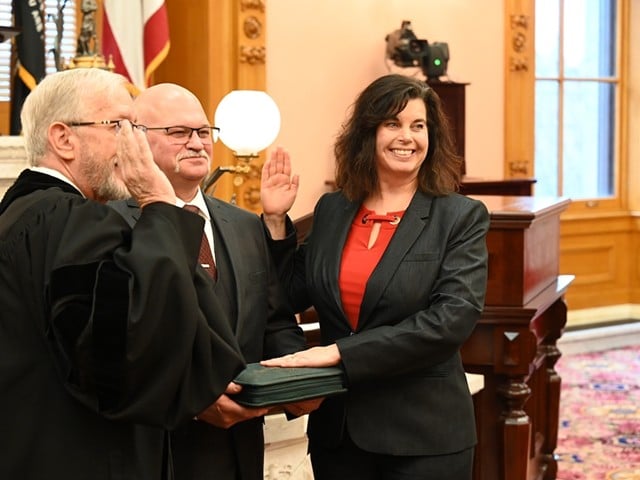
Leslie Ghiz is taking the judge’s seat a little early. The former city council member was elected to the Hamilton County Common Pleas Court in November, but she was appointed to the seat early by Gov. John Kasich to replace Dennis Helmick, who retired at the end of 2012.
The magic of capitalism: Delta is already matching a low-cost carrier’s fares to Denver at the Cincinnati/Northern Kentucky International Airport.
The U.S. Postal Service is ending Saturday mail delivery starting Aug. 1. The Postal Service has been dealing with financial problems ever since a 2006 mandate from U.S. Congress forced the mail delivery agency to pre-fund health care benefits for future retirees. Riddled with gridlock, Congress has done nothing to help since the mandate was put in place. This will be the first time the Postal Service doesn’t deliver mail on Saturdays since 1863.
It’s unlikely zombies could be cured by love, but it’s possible they could be cured by science.
The next Michael Jordan has been discovered: